Published: 13:28 11-09-2026 Article ID: VT2026-36
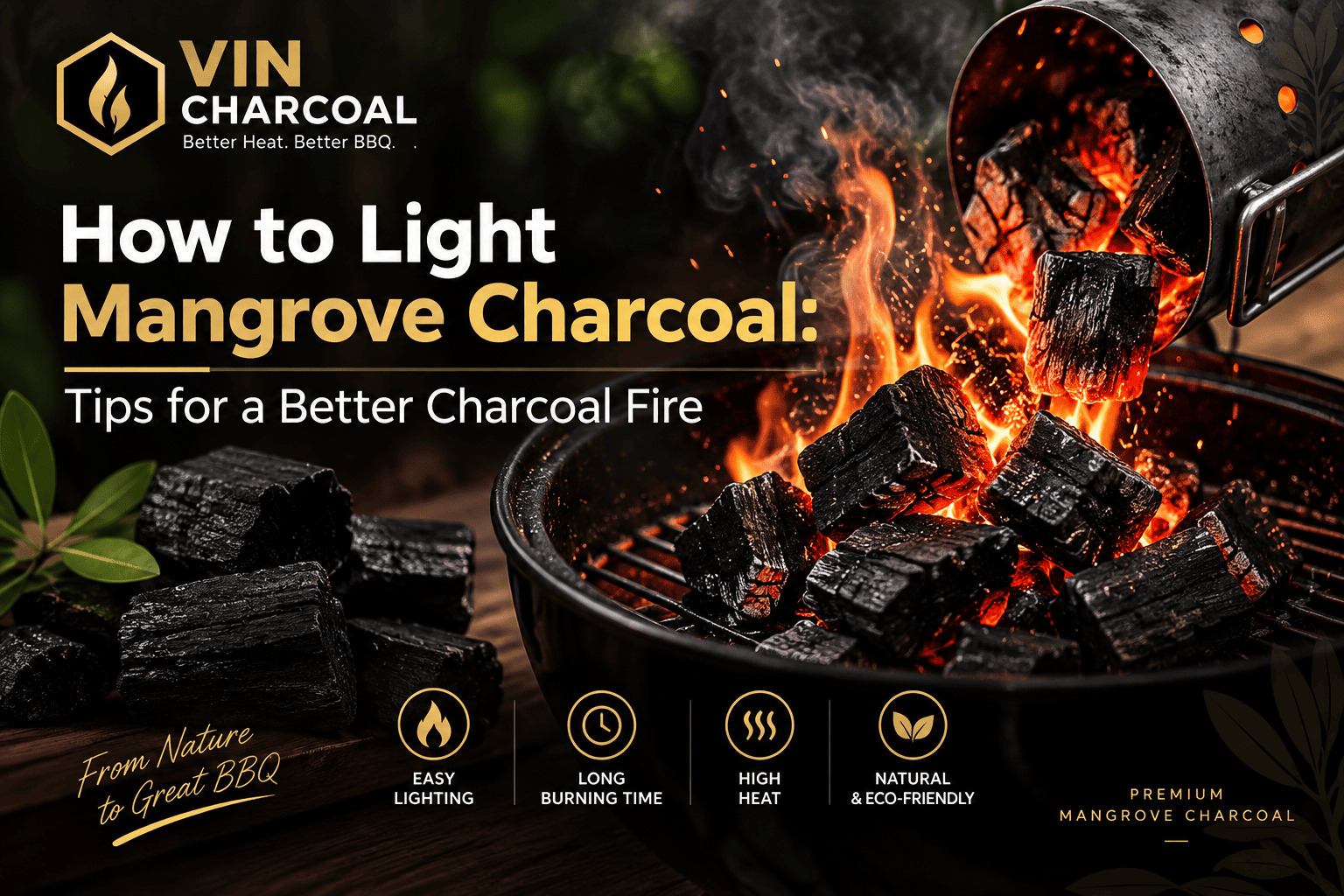
Lighting charcoal properly is one of the most important steps in preparing a great BBQ. Even high-quality charcoal can deliver disappointing results if it is rushed, arranged poorly or lit without enough airflow. Learning how to light mangrove charcoal correctly can help you build a more consistent fire, manage your cooking heat and enjoy a smoother grilling experience from start to finish.
Mangrove charcoal is a popular choice for charcoal BBQ cooking because its dense pieces are well suited to creating a strong and lasting charcoal bed. However, larger and denser pieces can take a little patience to get fully established. Instead of trying to create a huge flame immediately, the goal is to establish a hot core of burning charcoal and allow the fire to spread naturally.
In this guide, VIN CHARCOAL explains practical ways to light mangrove charcoal, how to recognise when your charcoal is ready for cooking and what to avoid when starting your next BBQ.
Mangrove charcoal is a type of lump charcoal produced from mangrove wood. Unlike manufactured briquettes that are formed into uniform shapes, mangrove charcoal generally retains the irregular shapes and sizes associated with natural lump charcoal.
The density of the charcoal is particularly useful when building a charcoal fire for grilling. Once properly established, a bed of charcoal can provide the heat needed for everything from quick grilling to longer BBQ sessions.
Because the pieces can vary in size, however, lighting mangrove charcoal is not simply a matter of putting a flame against one large piece and waiting. Good charcoal arrangement, airflow and patience all play an important role.
There are several ways to start a charcoal BBQ, but the basic principle remains the same: start a concentrated fire in a smaller area and gradually allow it to spread through the remaining charcoal.
Before lighting anything, make sure your BBQ is positioned outdoors in a suitable, well-ventilated area. Remove excessive ash from previous cooking sessions because accumulated ash can restrict airflow through the bottom of the grill.
Arrange your mangrove charcoal so that the pieces have contact with each other while still leaving small spaces for air to circulate. Avoid packing everything tightly together. Fire requires oxygen, and a charcoal pile with poor airflow can be frustratingly slow to establish.
Once several pieces are glowing strongly, the heat will begin transferring to the neighbouring charcoal. Allow this process to continue rather than immediately spreading the pieces around the entire grill.
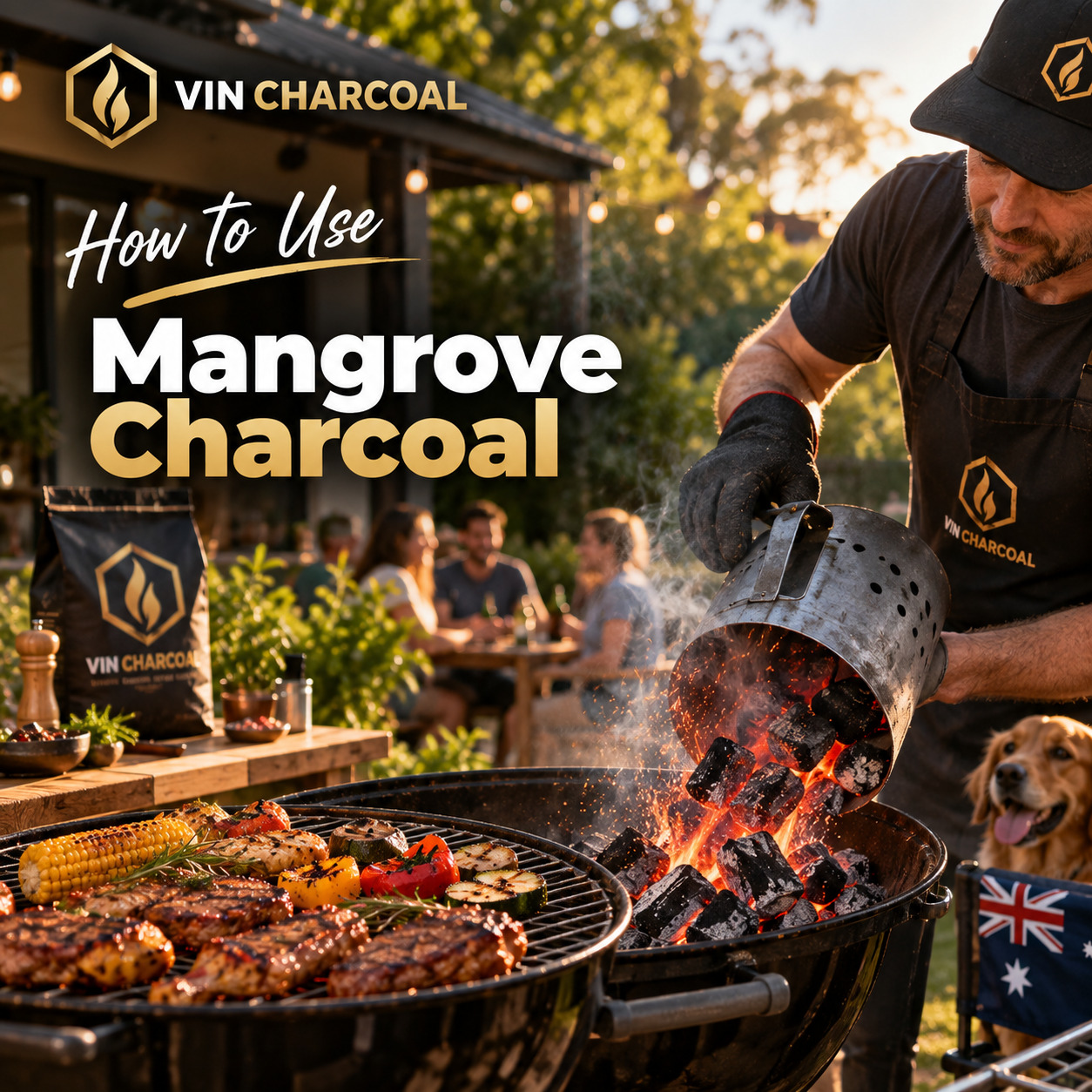
A chimney starter is one of the most practical ways to light mangrove charcoal for a BBQ. It concentrates charcoal vertically while allowing air to enter from underneath, creating a natural upward draft.
Place suitable fire starters or another appropriate ignition material underneath the chimney, then fill the chimney with the amount of charcoal required for your cook. Light the starter and leave the chimney in a safe position while the charcoal begins heating.
The charcoal at the bottom will ignite first. Heat then travels upward through the chimney until more of the charcoal becomes established.
You do not need every individual piece to be completely covered in ash before transferring the charcoal. What matters is that you have a strong, established section of glowing charcoal capable of continuing the ignition process after it is poured into the BBQ.
Once ready, carefully transfer the charcoal into the grill and arrange it according to the type of cooking you plan to do.
You can also start mangrove charcoal directly inside your BBQ using suitable BBQ fire starters.
Build a small pile of charcoal rather than immediately filling the entire cooking area. Position the fire starters where they can ignite several pieces at once, while maintaining enough space for oxygen to move through the pile.
Light the starters and allow the charcoal immediately surrounding them to establish. Once those pieces are glowing, gradually position additional charcoal around the established fire.
This approach can take more attention than a chimney starter because the arrangement of the charcoal and airflow become especially important. Resist the temptation to continually move the pieces. Giving the charcoal time to establish usually produces a better result than constantly rearranging the fire.
One of the most common reasons a charcoal fire struggles is insufficient oxygen.
If your charcoal BBQ has adjustable vents, open them while establishing the fire. Air entering through the lower vents supplies oxygen to the charcoal, while hot air and combustion gases escape through the upper section of the BBQ.
If the fire appears weak, check the airflow before automatically adding more charcoal. Ash may be obstructing the lower vents, charcoal may be packed too tightly, or the vents may simply not be open enough.
Once the fire is established and you begin cooking, the vents can then become part of your temperature-management strategy. However, avoid completely closing the airflow while you still need the charcoal burning, as restricting oxygen significantly reduces combustion.
A common BBQ mistake is putting food on the grill simply because flames are visible.
Large flames do not necessarily mean you have a stable charcoal fire. During the initial lighting stage, flames may come from the ignition material or from the charcoal as the fire develops. For predictable grilling, you generally want an established bed of hot charcoal rather than uncontrolled flames.
Look for charcoal that is visibly glowing in areas, with the fire clearly spreading through the pile. Some surfaces may develop a light ash coating while other areas remain black. This is normal, particularly with irregular pieces of lump charcoal.
The exact lighting time will vary depending on the charcoal size, quantity, lighting method, BBQ design, airflow and weather conditions. Instead of relying entirely on a timer, learn to judge the condition of the charcoal itself.
After learning how to light mangrove charcoal, the next step is arranging it correctly.
For high-heat grilling, you can concentrate the charcoal beneath the cooking area where strong heat is required. This works well when you want a hotter zone for searing or relatively quick cooking.
For greater flexibility, create a two-zone charcoal fire. Place most of the hot charcoal on one side of the BBQ and leave the other side with little or no charcoal underneath.
The hot side provides direct heat, while the cooler side provides indirect heat. If food is cooking too quickly over the charcoal, you can move it to the indirect side without having to remove charcoal from the BBQ.
This simple arrangement gives you much more control and is particularly useful when cooking different foods at the same time.
More charcoal does not automatically produce a better BBQ.
The amount required depends on your grill size, the food being cooked, your target temperature, weather conditions and expected cooking time. A quick grilling session usually does not require the same quantity of charcoal as a longer cook.
Using excessive charcoal can create more heat than you actually need and make temperature management unnecessarily difficult. Starting with an appropriate quantity and adding more when required is often more practical.
For longer cooking sessions, additional unlit charcoal can be positioned strategically so that the established fire gradually spreads. The exact setup will depend on your BBQ and cooking method.
Several simple mistakes can make charcoal unnecessarily difficult to light:
Correcting these basic issues can make a significant difference to your BBQ experience without requiring complicated equipment.
Outdoor conditions can affect the way your charcoal behaves. Wind can increase airflow and make the charcoal burn differently, while cold or damp conditions may increase the time required to establish the fire.
On windy days, position the BBQ where it is protected from strong gusts while still remaining safely outdoors with adequate ventilation. Do not move a lit charcoal BBQ into an enclosed space simply to escape the weather.
In cooler conditions, allow additional preparation time. A chimney starter can be particularly useful because it concentrates the heat and airflow within a relatively small area.
Planning for the weather is much easier than trying to compensate for an unstable fire after the food is already on the grill.
VIN CHARCOAL supplies both Mangrove Charcoal and Sawdust Charcoal, giving BBQ users different options depending on their cooking setup and preferences.
Mangrove charcoal consists of natural, irregular charcoal pieces and provides the traditional lump-charcoal experience. Sawdust charcoal is manufactured into more consistent shapes, which can make arranging the charcoal bed straightforward.
Neither option needs to be treated as the universal choice for every BBQ. Grill design, cooking style, heat requirements and personal preference all influence which charcoal is more suitable.
For customers looking specifically for traditional lump charcoal, mangrove charcoal is a practical option. Those who prefer uniform charcoal pieces may want to consider sawdust charcoal.
Good storage makes your next BBQ easier.
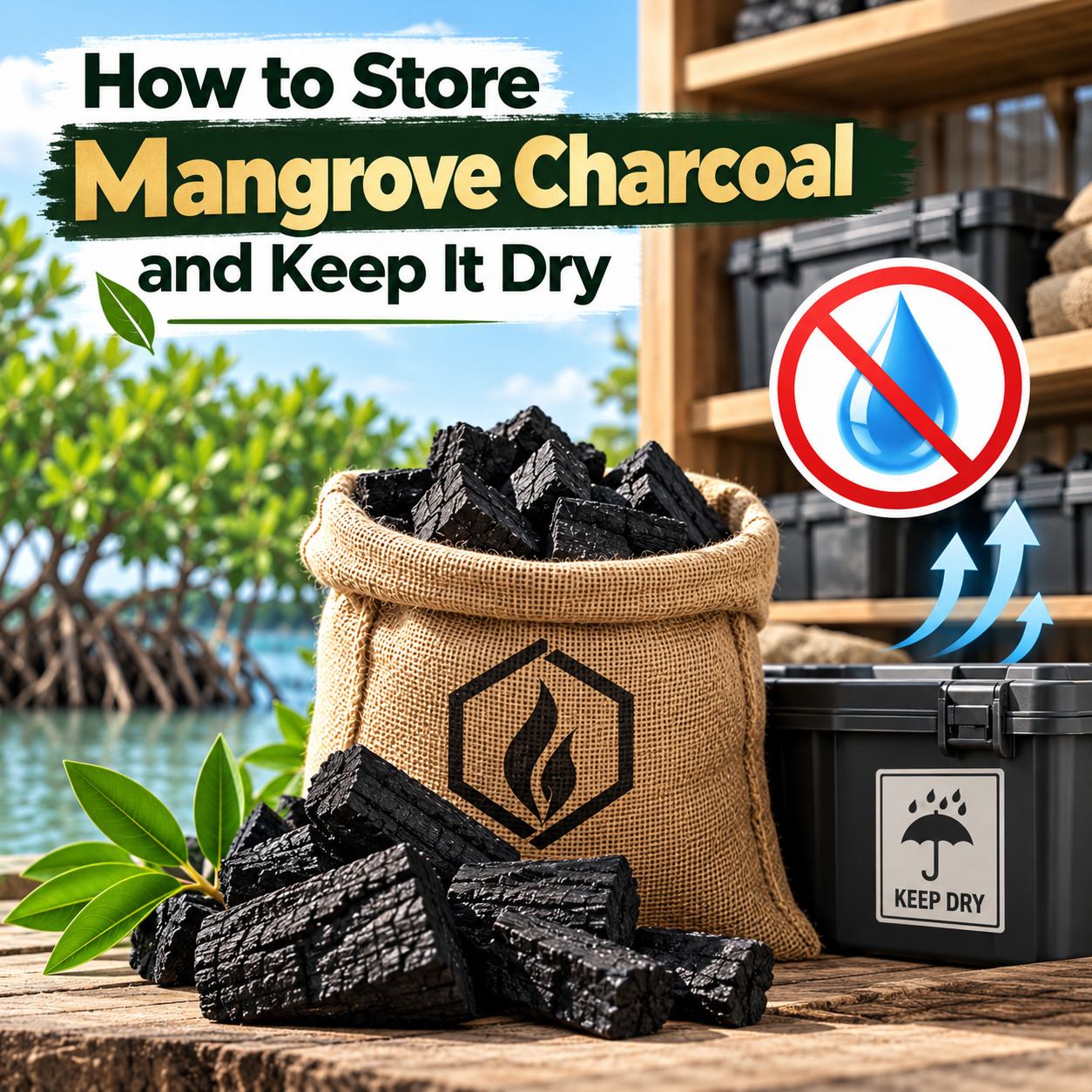
Keep unused mangrove charcoal in a dry, protected location and avoid exposing it to rain or unnecessary moisture. If the original bag has been opened, close it securely or transfer the charcoal to a suitable dry storage container.
Before storing any charcoal that has been inside the BBQ, make absolutely certain that it is completely extinguished and cold. Charcoal can retain heat internally even when it appears inactive from the outside.
Never place hot or potentially smouldering charcoal into storage containers or near combustible materials.
Charcoal produces carbon monoxide during combustion, so charcoal BBQs should be used outdoors in properly ventilated areas. Never use a charcoal BBQ inside a house, garage, tent, vehicle or other enclosed space.
Place your BBQ on a stable surface away from combustible materials and supervise the fire while it is operating. Use suitable BBQ tools when handling hot charcoal, and keep children and pets safely away from the cooking area.
After cooking, follow your BBQ manufacturer's instructions for shutting down and disposing of ash. Do not assume charcoal is safe to handle simply because visible flames have disappeared.
A chimney starter is one of the simplest methods because it concentrates the charcoal and encourages strong airflow from underneath. Suitable BBQ fire starters can also be used to establish charcoal directly inside the grill.
There is no single exact time. Lighting time depends on charcoal size, quantity, airflow, weather conditions and the method used. Judge readiness by the condition of the charcoal and strength of the established fire rather than relying solely on a timer.
Check whether the charcoal is dry, whether your BBQ vents are open and whether enough air can circulate between the pieces. Excess ash blocking the lower vents can also reduce airflow.
Not necessarily. Natural lump charcoal does not always develop a perfectly uniform grey coating. You are looking for a strong, established charcoal bed with visible glowing areas and enough heat to continue spreading through the charcoal.
Yes, additional charcoal can be added when a longer cooking session requires it. Allow sufficient time for newly added charcoal to become established and manage its position according to your cooking method.
Learning how to light mangrove charcoal is less about creating the biggest flame and more about building a stable, manageable charcoal fire. Start with dry charcoal, provide plenty of airflow, establish a concentrated hot section and only then arrange the charcoal for your chosen cooking method.
With a little preparation and patience, managing a charcoal BBQ becomes much easier. Whether you are grilling over direct heat, creating two cooking zones or preparing for a longer BBQ session, a properly established charcoal bed gives you a better foundation for the food that follows.
VIN CHARCOAL supplies charcoal for BBQ and grilling, with Mangrove Charcoal and Sawdust Charcoal as our two main charcoal options.
VINCHARCOAL — Better Heat. Better BBQ.
📍 Springvale, Melbourne VIC 3171
📞 0492 345 679
📧 contact@vincharcoal.com
🌐 vincharcoal.com

I started VinCharcoal not simply from a business perspective, but from a genuine interest in charcoal and the value that a well-made product can bring to everyday cooking, grilling, and professional use. To me, charcoal is more than just a source of heat. Its quality reflects the raw materials, production process, craftsmanship, and attention to detail behind every piece. Through VinCharcoal, I want to share practical knowledge about charcoal, explore what makes a truly reliable product, and help customers better understand the importance of choosing the right charcoal for their needs.
 Loading...
 Loading...
