Cooking with mangrove charcoal can transform a good BBQ into a great one. Known for producing strong, consistent heat and being well suited to grilling, mangrove charcoal is a popular choice for BBQ enthusiasts, restaurants, and commercial kitchens.
However, even quality charcoal will not perform at its best if it is used incorrectly. Problems such as difficult ignition, excessive smoke, unstable temperatures, or food cooking unevenly are often caused by the way the charcoal is stored, lit, arranged, or managed.
Whether you are preparing steaks, seafood, chicken, skewers, or a large family BBQ, understanding how to use charcoal properly can help you achieve more consistent results.
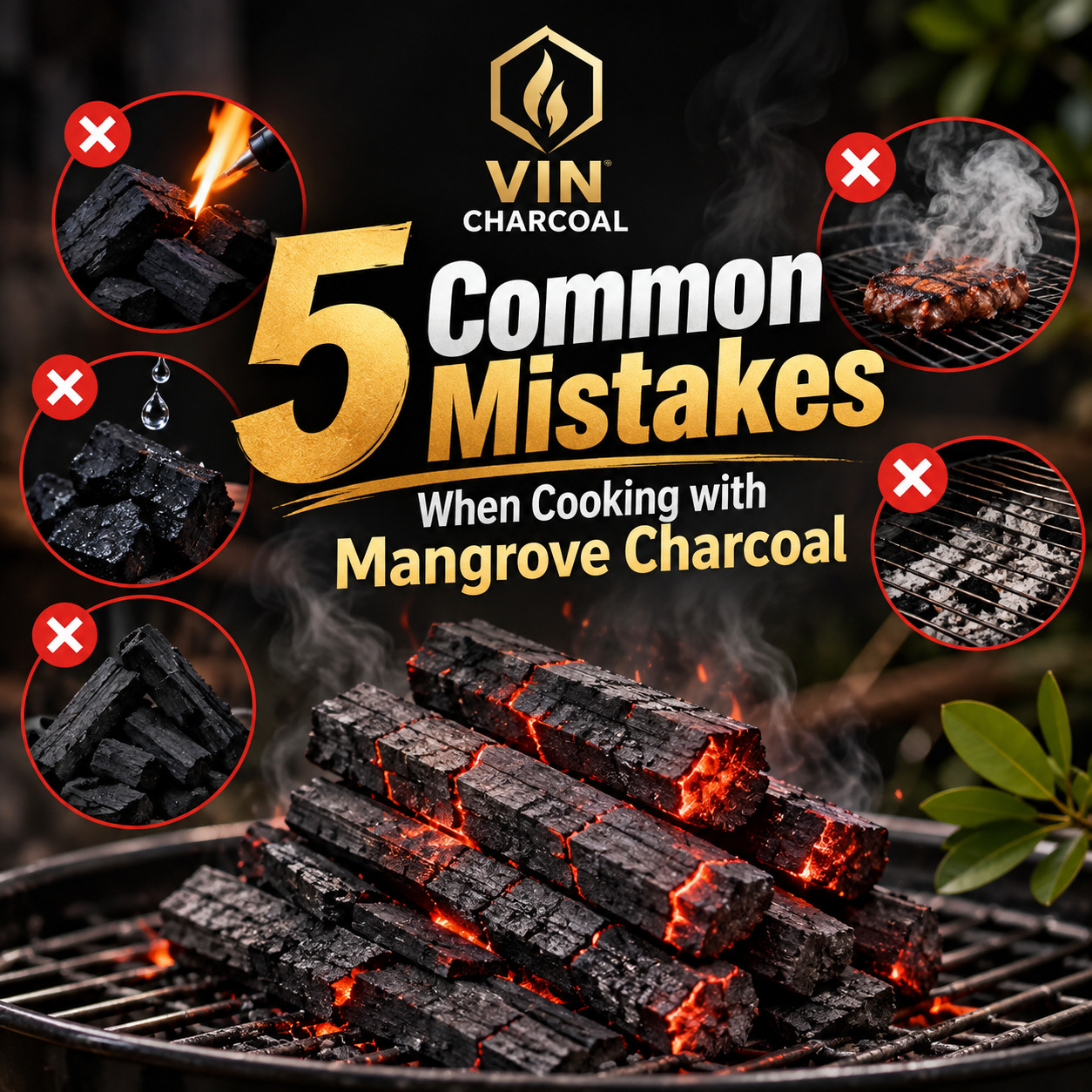
Here are 5 common mistakes when cooking with mangrove charcoal and how to avoid them.
1. Using Too Much Fire Starter
One of the most common mistakes when lighting charcoal is using too much lighter fluid or other chemical fire starters.
It may seem like adding more accelerant will get your BBQ ready faster, but excessive lighter fluid can create strong flames and unpleasant odours. More importantly, if the charcoal has not completely burned off the starter before food is placed on the grill, unwanted flavours may affect your cooking.
The goal is not to create the biggest possible flame. Instead, you want the charcoal to ignite gradually until a stable bed of hot coals is established.
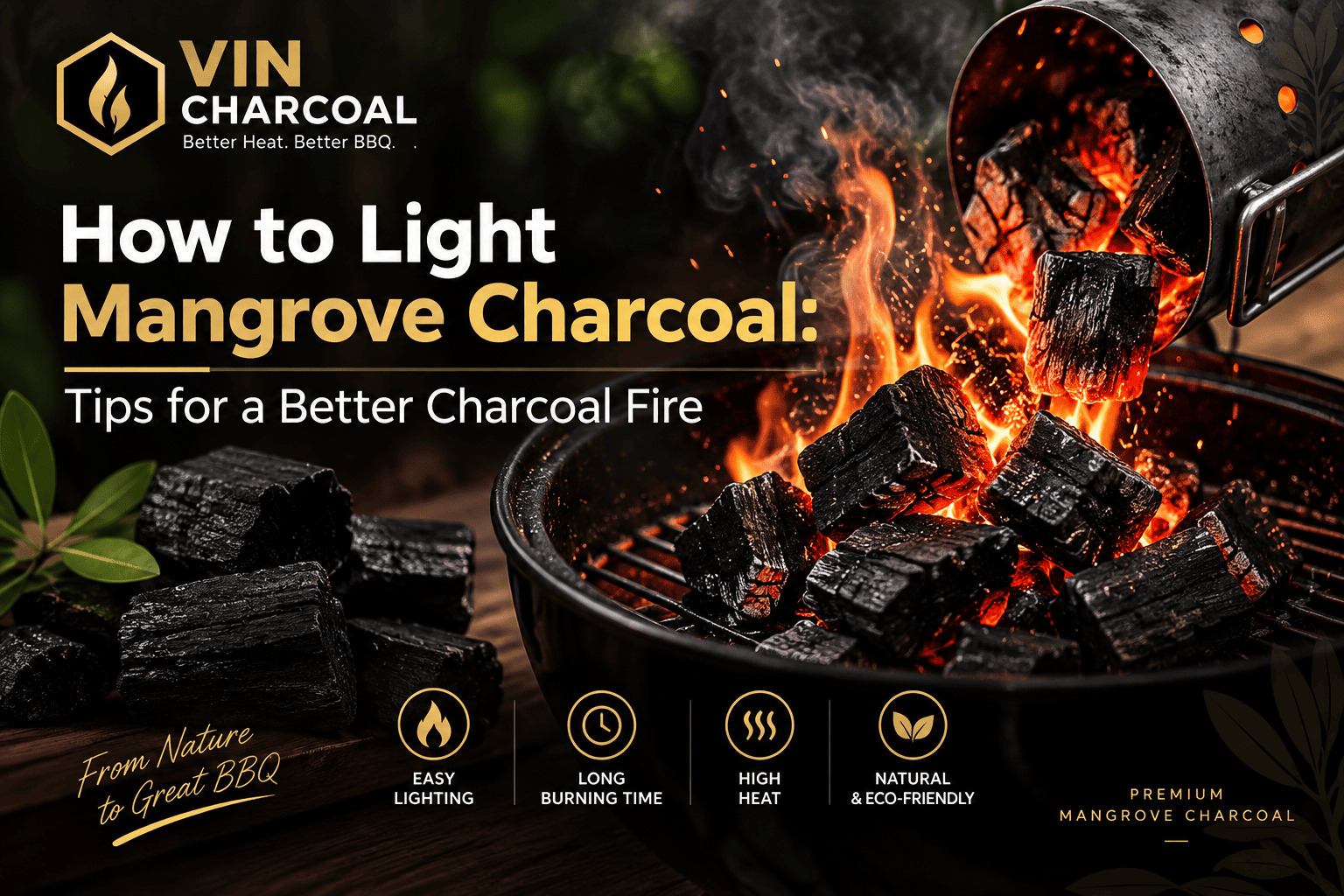
A charcoal chimney starter is a useful option because it allows you to light charcoal with paper or suitable firelighters while reducing the need for excessive accelerants.
Once the charcoal is burning properly, give it enough time to establish consistent heat before cooking.
Tip: Be patient during ignition. Strong, stable heat is more useful than a large flame that disappears quickly.
2. Cooking Before the Charcoal Is Ready
Another common BBQ mistake is putting food on the grill immediately after the charcoal catches fire.
Visible flames do not necessarily mean your grill is ready for cooking.
During the early ignition stage, charcoal may produce fluctuating temperatures and more smoke. Cooking at this point makes heat management difficult and can lead to food being burnt on the outside while remaining undercooked inside.
Instead, allow the charcoal to heat properly.
Depending on your cooking method and the amount of charcoal being used, you generally want to see an established bed of glowing charcoal before beginning to grill. Some pieces may develop a light ash coating as they become fully heated.
This gives you a more stable cooking environment.
For high-temperature grilling, such as steaks or skewers, properly heated charcoal provides the intense heat needed for effective searing.
For slower cooking, establishing the charcoal correctly at the beginning makes maintaining a steady temperature much easier.
3. Poor Charcoal Arrangement
Simply pouring charcoal randomly into the BBQ can make temperature control unnecessarily difficult.
How you arrange your mangrove charcoal should depend on what you are cooking.
For foods requiring high direct heat, the charcoal can be concentrated beneath the cooking area. This creates a strong heat zone suitable for searing steaks, burgers, seafood, or skewers.
For larger cuts or foods that need longer cooking times, a two-zone fire is often more practical.
Place most of the hot charcoal on one side of the grill and leave the other side with little or no charcoal. You now have two cooking areas:
- Direct heat for searing and fast cooking.
- Indirect heat for slower cooking and temperature control.
If food starts browning too quickly, you can simply move it away from the hottest part of the grill.
This simple technique provides significantly more control than spreading charcoal evenly across the entire BBQ.
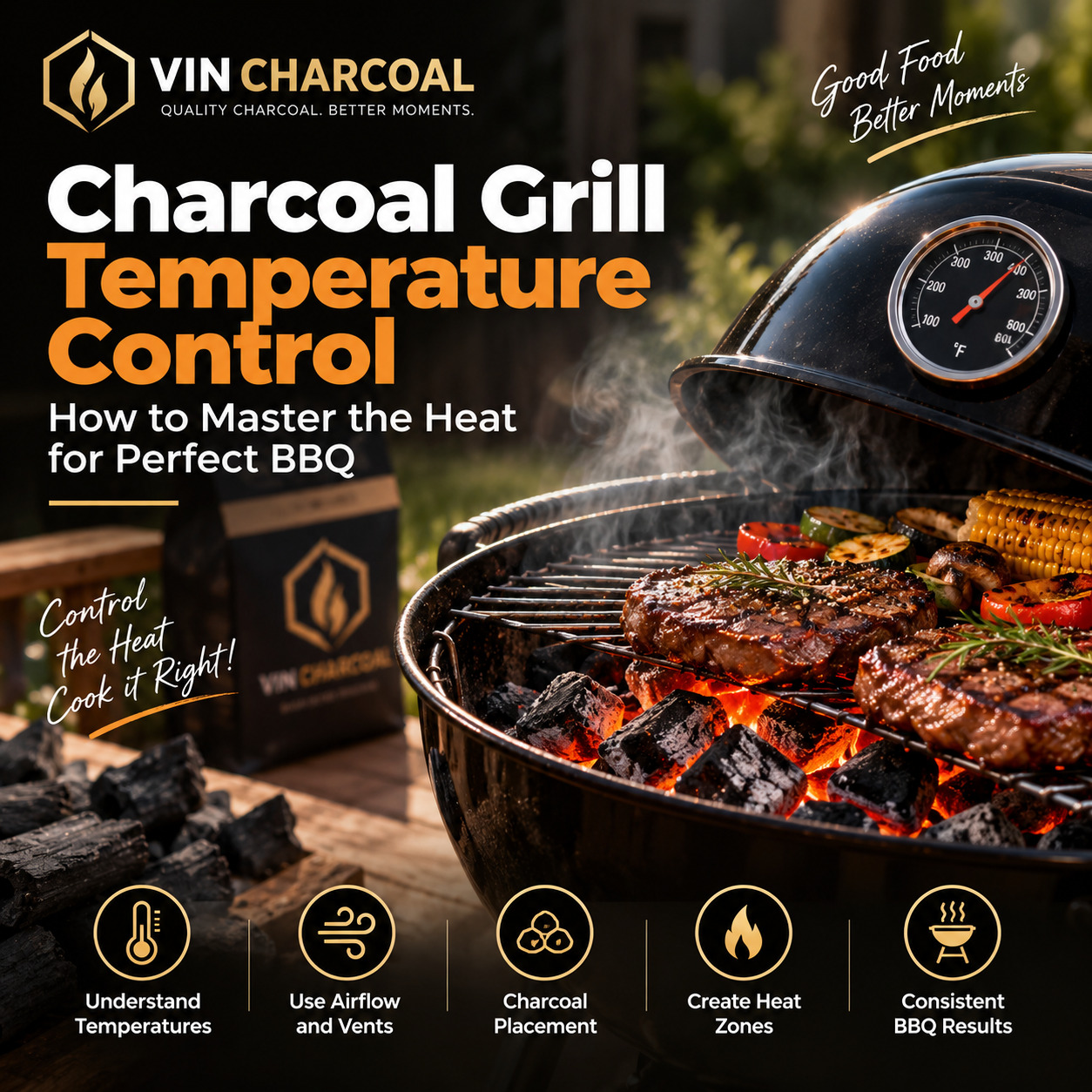
4. Ignoring Airflow and Temperature Control
Charcoal needs oxygen to burn.
One of the biggest advantages of a charcoal BBQ is the ability to manage cooking temperature by controlling airflow. Unfortunately, beginners often overlook the vents completely.
If airflow is too restricted, the charcoal may struggle to maintain temperature. If airflow is excessive, the charcoal may burn hotter and faster than necessary.
On BBQs with adjustable vents, opening the vents generally allows more oxygen into the cooking chamber and encourages a hotter fire. Reducing airflow can help lower the temperature.
The exact behaviour depends on your grill design, so temperature control becomes easier with experience.
Avoid constantly opening the lid as well.
Every time you remove the lid, you change the airflow and release heat from the cooking chamber. Instead of repeatedly checking the food, allow the grill and charcoal to maintain a stable cooking environment whenever possible.
Learning to control oxygen is one of the most important skills in charcoal grilling.
5. Storing Mangrove Charcoal Incorrectly
You can use excellent charcoal and still have difficulty lighting it if it has been stored badly.
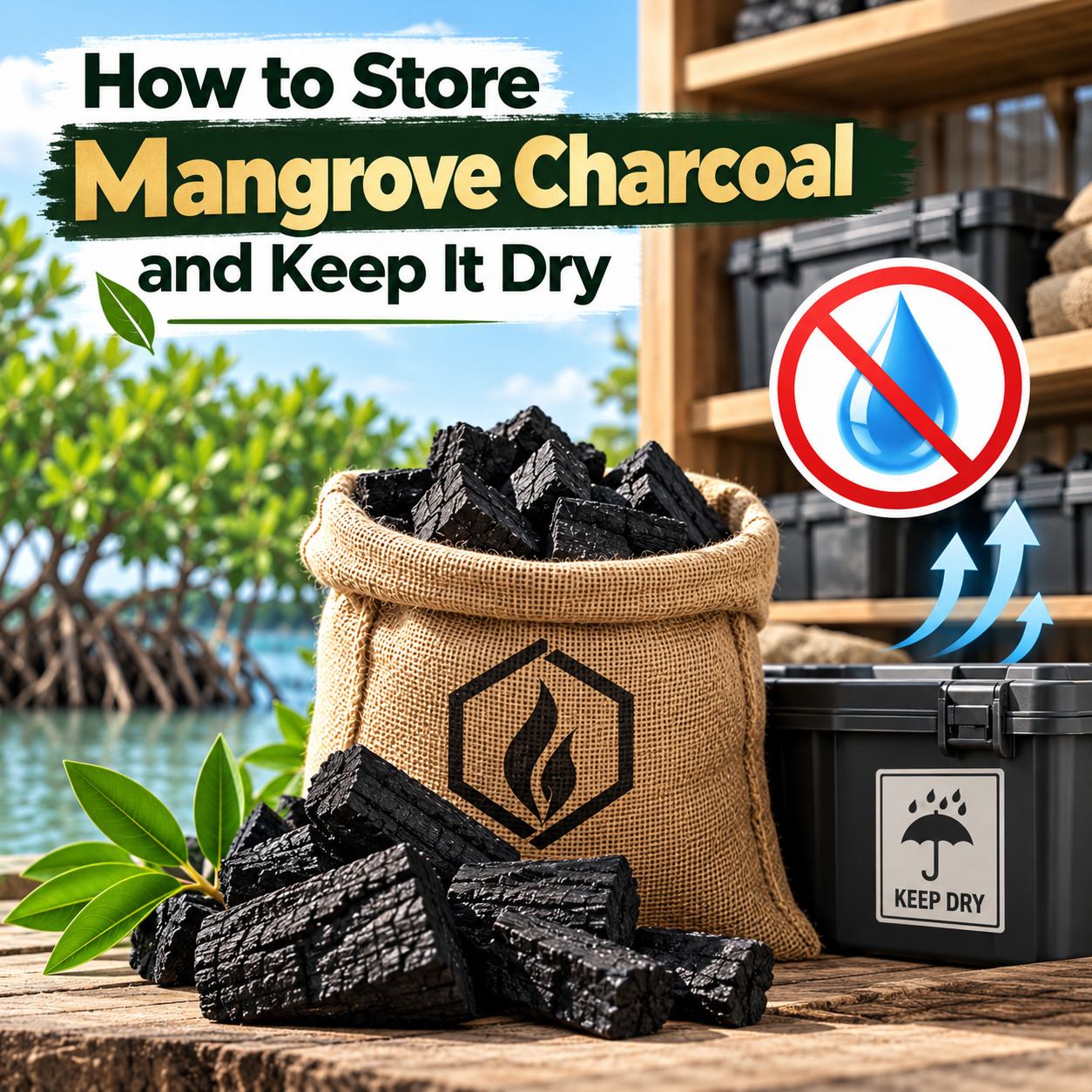
Charcoal should be kept dry and protected from moisture.
When charcoal absorbs moisture from the surrounding environment, ignition can become slower and maintaining consistent heat may become more difficult. This is especially important if bags are stored for extended periods.
Keep your charcoal in a dry, covered location and protect opened bags from rain and humidity.
For restaurants, BBQ businesses, catering operations, or anyone buying charcoal in larger quantities, proper storage becomes even more important. Keep bags off wet floors where possible and protect stock from direct exposure to weather.
Good charcoal deserves good storage.
How to Get Better Results with Mangrove Charcoal
Successful charcoal cooking comes down to three fundamentals: quality fuel, proper preparation, and heat control.
Start with dry charcoal and build the amount of fuel required for the food you plan to cook. Light it properly and allow enough time for the charcoal to establish a stable heat source.
Next, arrange your cooking zones according to your menu.
You do not necessarily need maximum heat everywhere. A combination of direct and indirect heat often provides much better control, especially when cooking several different foods at once.
During cooking, use the grill vents and charcoal arrangement to manage temperature rather than continually adding more fuel.
With practice, you will begin to recognise how your charcoal behaves and how much you need for different BBQ sessions.
Why Charcoal Quality Matters
Cooking technique is important, but the quality and consistency of your charcoal also affect the grilling experience.
Good BBQ charcoal should provide reliable heat and perform consistently enough for the cook to manage temperature effectively.
This becomes particularly important in commercial environments such as restaurants, catering businesses, charcoal grills, and BBQ kitchens, where consistency matters across many cooking sessions.
A predictable fuel source allows chefs and grill operators to focus on the food rather than constantly compensating for inconsistent charcoal performance.
At VINCHARCOAL, our focus is straightforward: provide charcoal suitable for customers who want dependable heat and a better grilling experience.
Mangrove Charcoal for Home BBQ and Commercial Grilling
Mangrove charcoal can be used across a wide range of charcoal cooking applications, from backyard BBQs to professional kitchens.
For home cooks, it provides the traditional experience of cooking over real charcoal and allows precise control through direct and indirect heat zones.
For restaurants and commercial BBQ operations, charcoal selection becomes part of daily kitchen efficiency. Burn characteristics, heat output, storage, and consistency can all influence how smoothly a charcoal grill operates during service.
Whatever the application, the same principle applies: good charcoal performs best when it is used correctly.
Avoid excessive fire starter, wait until the charcoal is properly heated, arrange your fire according to the food, manage airflow carefully, and always keep your charcoal dry.
These small changes can make a significant difference to your BBQ.
Better Heat. Better BBQ.
Great charcoal cooking does not require complicated techniques. It requires understanding your fuel and learning how to control the fire.
By avoiding these five common mistakes, you can achieve more consistent temperatures, improve your grilling technique, and get more from every BBQ session.
Looking for mangrove charcoal for BBQ, grilling, or commercial use in Melbourne? Get in touch with VINCHARCOAL to learn more about our charcoal products.
VINCHARCOAL — Better Heat. Better BBQ.
📍 Springvale, Melbourne VIC 3171
📞 0492 345 679
📧 contact@vincharcoal.com
🌐 vincharcoal.com


 Loading...