Published: 15:23 09-09-2026 Article ID: VT2026-32
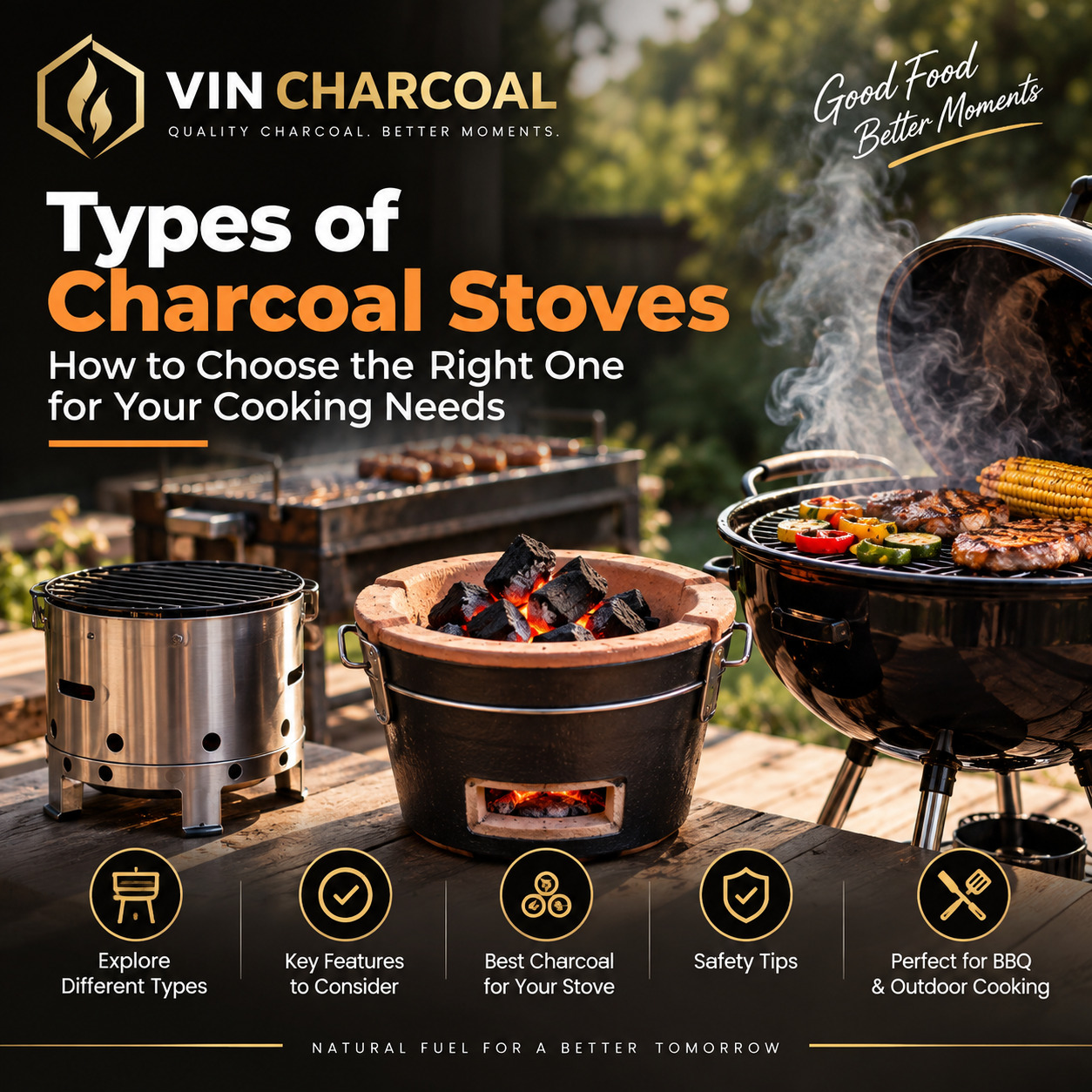
Charcoal cooking has been enjoyed around the world for generations. From backyard BBQs and camping trips to traditional cooking and restaurant kitchens, charcoal stoves provide a simple and versatile way to cook food using the intense heat produced by burning charcoal.
But not every charcoal stove works in the same way.
Some are designed for portability and quick outdoor meals, while others provide a larger cooking area for family BBQs. Traditional clay stoves can concentrate heat efficiently, while kettle-style charcoal grills provide greater control through lids and adjustable air vents.
Choosing the right charcoal stove therefore depends on where you cook, what you cook, how many people you normally serve and the type of charcoal you intend to use.
In this guide, Vin Charcoal explores the major types of charcoal stoves, their advantages, important features to consider and how to select a suitable stove for your cooking needs.
A charcoal stove is a cooking appliance that uses charcoal as its primary fuel source.
The basic principle is straightforward. Charcoal burns inside a dedicated chamber or firebox, producing heat that transfers to a cooking grate, pot, pan or other cooking surface above it.
However, modern charcoal stoves come in many different designs.
A simple portable stove may consist of a compact metal body with ventilation holes and a cooking grate. More advanced charcoal BBQs may include adjustable vents, lids, thermometers, ash collectors and multiple cooking zones.
Charcoal requires oxygen to continue burning.
Most charcoal stoves therefore include openings or vents that allow air to reach the fuel. As oxygen passes through the stove, the charcoal continues to burn and generate heat.
The amount of airflow can significantly influence the intensity of the fire.
More airflow generally allows the charcoal to burn more actively, while reducing airflow can decrease the intensity of the fire.
This simple relationship between charcoal, oxygen and heat is one of the fundamentals of charcoal cooking.
There is no single charcoal stove that is best for every situation.
Understanding the main designs can help you choose one that matches your cooking style.
A portable charcoal stove is designed to be compact and relatively easy to transport.
These stoves are popular for outdoor activities where a full-size BBQ would be inconvenient.
Depending on the model, they may be suitable for camping, picnics, fishing trips or other outdoor cooking situations where charcoal use is permitted.
The main advantage is portability.
Their smaller size can also mean that less charcoal is required for a short cooking session compared with a much larger grill.
Portable charcoal stoves are particularly useful for:
However, their compact cooking area can become restrictive when preparing food for many people.
When choosing a portable stove, look for a stable construction and sufficient ventilation rather than selecting a model based only on size.
Clay charcoal stoves have been used in different forms across many cultures.
A typical design includes a heat-resistant clay or ceramic interior surrounded by a supporting structure.
The thick material helps contain and concentrate heat around the cooking area.
One of the attractions of this design is simplicity.
There may be relatively few mechanical components, while the shape of the stove helps concentrate the charcoal's heat towards the cooking vessel or grate.
These stoves can work particularly well for cooking methods involving pots, pans, skewers or direct grilling, depending on their design.
However, clay and ceramic components require careful handling because they may be damaged by impact or extreme temperature changes.
The kettle grill is one of the most recognisable forms of charcoal BBQ.
It normally consists of a rounded lower charcoal chamber, a cooking grate and a fitted lid.
Most models also include adjustable air vents.
This combination makes a kettle grill much more versatile than a basic open charcoal stove.
The lid allows heat to circulate around food instead of reaching it only from below.
This means you can use the grill for both direct and indirect cooking.
For example, charcoal can be placed on one side of the kettle while food is positioned on the other side.
The food is then cooked using circulating heat rather than sitting directly above the hottest charcoal.
This makes kettle grills suitable for everything from burgers and steaks to chicken and larger cuts of meat.
Open charcoal grills are among the simplest BBQ designs.
Charcoal sits underneath a metal cooking grate, and food is positioned directly above the heat.
These grills are particularly suitable for fast, direct cooking.
Typical options include:
Because there is often no lid, temperature management relies heavily on charcoal quantity, charcoal position and the distance between the fuel and food.
They are straightforward to use but require attention when cooking over strong direct heat.
Barrel-style BBQs generally provide a larger cooking area than small portable grills.
Their elongated shape makes them particularly useful when preparing food for groups.
Depending on the design, charcoal can be arranged in different sections of the firebox to create multiple temperature zones.
A barrel-style charcoal BBQ may be worth considering if you regularly cook:
The larger cooking surface provides flexibility, although it also means the BBQ occupies more space and may require more charcoal when the entire cooking area is used.
Compact tabletop charcoal grills provide another option for small-scale cooking.
Many feature an open cooking grate positioned relatively close to the charcoal.
This configuration is particularly suitable for smaller portions and foods that cook quickly.
Their compact design can make them attractive when cooking space is limited.
However, a tabletop charcoal grill must always be placed on a suitable, stable and heat-resistant surface and used according to the manufacturer's safety instructions.
One of the first decisions when choosing a charcoal stove is whether you need portability or cooking capacity.
A portable stove is convenient when you frequently move your cooking equipment.
A full-size charcoal BBQ is generally more appropriate when it will remain in a backyard or dedicated outdoor cooking area.
You normally cook for one or a few people, need to transport the stove regularly or have limited storage space.
You regularly host family BBQs, cook several foods simultaneously or want enough room to create separate direct and indirect heat zones.
Neither option is inherently better. The right choice depends on how you actually intend to use the stove.
Before purchasing a charcoal stove, consider several practical factors.
Think about how many people you normally cook for.
A small grill may be perfectly adequate for two people but frustrating when preparing food for a large family.
At the same time, buying an unnecessarily large BBQ may increase charcoal consumption and require more storage space.
Good airflow is essential for charcoal combustion.
Look for a stove with appropriately positioned ventilation openings.
More advanced grills may provide adjustable vents, allowing you to change airflow during cooking.
This can make temperature control significantly easier.
A charcoal stove operates at high temperatures, so materials and construction matter.
Look for a sturdy body, stable legs or base, durable cooking grates and handles designed for the intended application.
Outdoor equipment should also be stored and maintained according to the manufacturer's instructions.
Charcoal produces ash after combustion.
A stove that provides easy access to the charcoal chamber or includes a removable ash collector can make cleaning considerably easier.
Removing excessive ash is not just about appearance.
Ash buildup can obstruct airflow, which may affect how effectively the charcoal burns during the next cooking session.
If you intend to take your stove camping or travelling, consider more than its overall dimensions.
Weight, handles, assembly requirements and storage shape can all affect portability.
A compact stove that is awkward to carry may not be as practical as expected.
Choosing a good stove is only part of the equation.
The charcoal used in the stove also affects the cooking experience.
Different charcoal products vary in shape, density and burn characteristics.
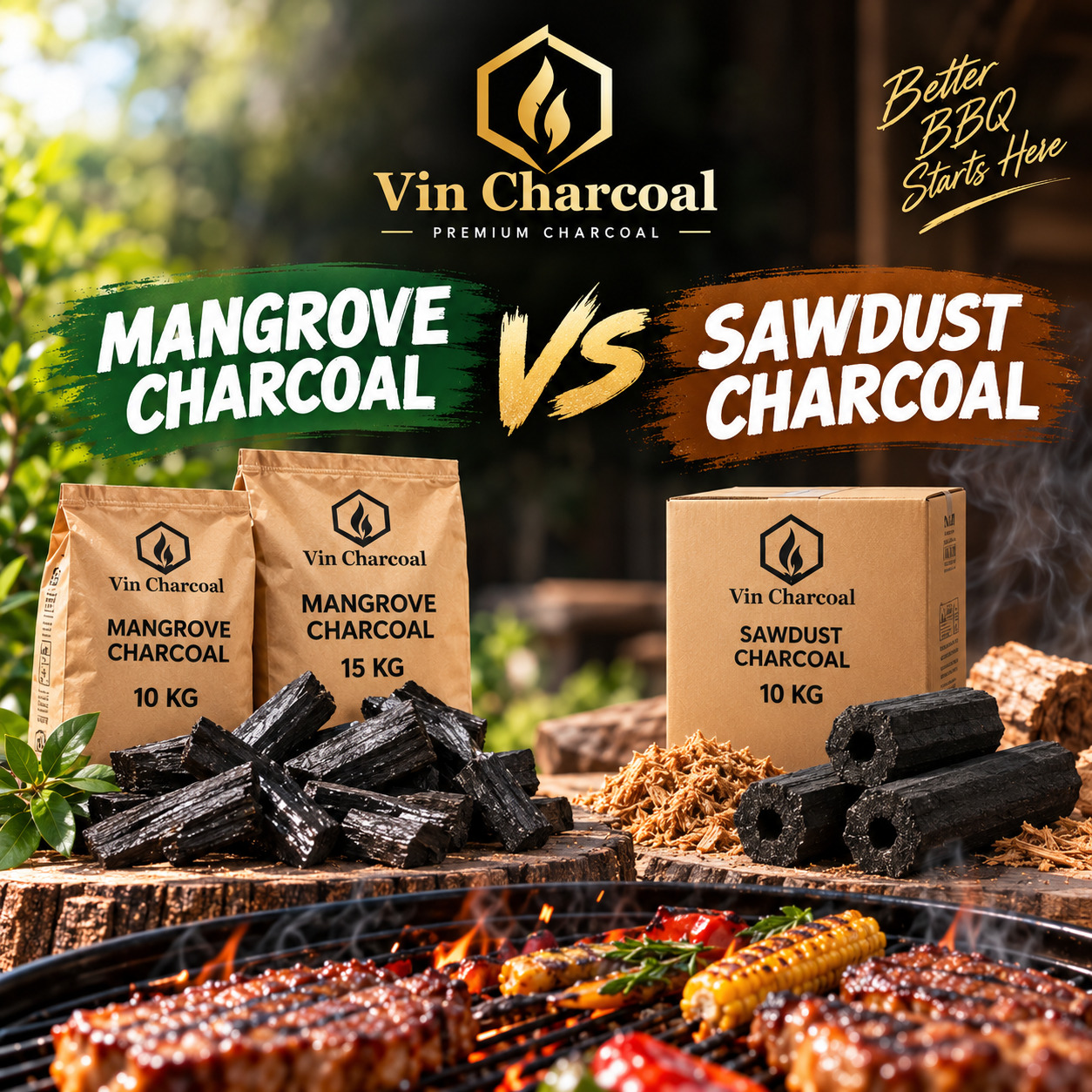
Vin Charcoal supplies two main charcoal options: Mangrove Charcoal and Sawdust Charcoal.
Mangrove charcoal consists of natural wood-charcoal pieces.
It is suitable for a wide variety of traditional charcoal cooking and BBQ applications.
For users who prefer natural lump-style charcoal and strong heat, Mangrove Charcoal can be a practical option.
Vin Charcoal Mangrove Charcoal is available in 10 kg and 15 kg sizes.
This provides options for both regular home users and customers requiring larger quantities.
Sawdust charcoal is produced from compressed sawdust.
The manufacturing process creates pieces with more consistent shapes compared with irregular natural lump charcoal.
This consistency can make arranging the charcoal inside certain stoves straightforward.
Vin Charcoal Sawdust Charcoal is supplied in 10 kg boxes.
The best option will ultimately depend on your stove design, cooking method and desired fire characteristics.
A common assumption is that bigger is always better when choosing a charcoal BBQ.
That is not necessarily true.
A larger cooking chamber may require more charcoal to establish the heat needed across the entire cooking area.
If you usually prepare small meals, a compact stove may be more efficient and convenient.
Conversely, trying to cook large quantities of food on an undersized stove can mean cooking multiple batches.
The most practical solution is to match stove capacity to your normal cooking requirements.
The design of your stove also determines the cooking techniques available to you.
With direct cooking, food is positioned directly above the charcoal.
This provides strong radiant heat and is suitable for relatively quick-cooking foods.
With indirect cooking, food is positioned away from the charcoal rather than immediately above it.
This technique works best with a stove or grill large enough to create separate heat zones and, ideally, a lid that helps circulate heat.
If versatility is important to you, choose a charcoal stove capable of supporting both methods.
Safety should be one of the most important considerations when choosing and operating any charcoal stove.
Burning charcoal produces carbon monoxide, an invisible and dangerous gas.
For this reason, charcoal BBQs and charcoal stoves intended for outdoor use should never be operated inside a home, garage, tent or other enclosed space.
Always follow the stove manufacturer's instructions.
Use the stove outdoors in a properly ventilated location and place it on a stable, appropriate surface away from combustible materials.
Keep children and pets away from the hot stove.
Use suitable long-handled BBQ utensils when necessary.
Do not leave an active charcoal fire unattended.
After cooking, allow the charcoal and ash to extinguish and cool completely before handling or disposal.
Remember that charcoal can remain extremely hot even when no flames are visible.
Regular maintenance can help keep a charcoal stove functioning properly.
Once the stove is completely cold, remove accumulated ash and clean the cooking grate as recommended by the manufacturer.
Check ventilation openings periodically to ensure they have not become blocked.
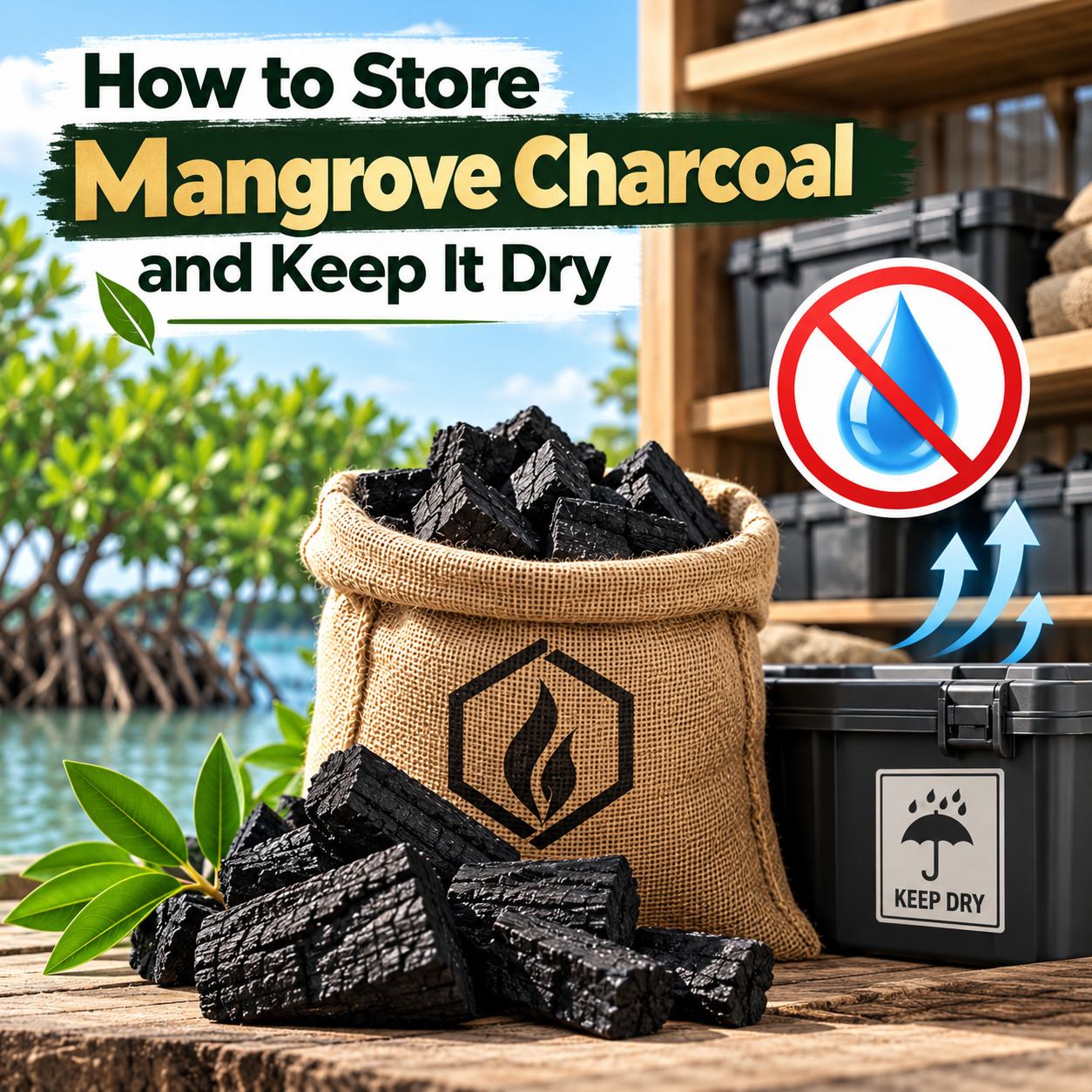
For metal stoves, appropriate storage away from unnecessary exposure to rain and moisture may help reduce deterioration.
If your stove contains ceramic or clay components, avoid impacts and follow the manufacturer's recommendations for heating and cooling.
The ideal charcoal stove depends on your lifestyle rather than simply choosing the largest or most expensive model.
For occasional outdoor trips, a portable charcoal stove may provide everything you need.
For regular backyard BBQs, a kettle charcoal grill offers excellent versatility.
For simple direct grilling, an open charcoal BBQ may be sufficient.
If you frequently cook for groups, a larger barrel-style grill can provide valuable additional cooking space.
And if you prefer compact, traditional cooking, a clay or tabletop charcoal stove may suit your needs.
Ask yourself four questions before choosing:
Answering these questions will quickly narrow down your options.
There is no single best type for everyone.
Portable charcoal stoves are useful for mobility, kettle grills provide versatility, while larger BBQs are better suited to cooking for groups.
Choose according to your cooking requirements and available outdoor space.
Charcoal stoves intended for outdoor BBQ use should not be used indoors or in enclosed spaces.
Burning charcoal produces carbon monoxide, which can accumulate to dangerous levels.
Always use the product according to its manufacturer's instructions.
This depends on the stove manufacturer's specifications.
Common options for appropriate charcoal cooking equipment include natural lump-style charcoal and compressed charcoal products.
Vin Charcoal supplies Mangrove Charcoal and Sawdust Charcoal for charcoal cooking applications.
Mangrove charcoal can be used for a variety of charcoal BBQ and grilling applications where natural wood charcoal and strong cooking heat are desired.
Choose a size based primarily on the number of people you normally cook for.
A compact grill is convenient for smaller meals, while families and frequent entertainers may benefit from a larger cooking surface.
Portable charcoal stoves can be convenient for outdoor trips where charcoal cooking is permitted.
Always check local fire restrictions, campsite regulations and weather conditions before lighting charcoal.
Choosing between different types of charcoal stoves becomes much easier once you understand how and where you plan to cook.
Portable stoves prioritise convenience. Kettle grills offer flexibility. Open grills provide straightforward direct cooking, while larger charcoal BBQs provide more cooking space for families and gatherings.
Regardless of which design you choose, the fuel remains at the heart of the charcoal cooking experience.
Selecting suitable charcoal, establishing good airflow and using a stove appropriate for your cooking needs can make outdoor cooking more manageable and enjoyable.
Vin Charcoal, operated by VD Import Export in Melbourne, supplies charcoal for BBQ, grilling and charcoal cooking applications.
Our current range includes Mangrove Charcoal in 10 kg and 15 kg sizes and Sawdust Charcoal in 10 kg boxes.
For product information, charcoal enquiries or wholesale requirements, contact Vin Charcoal in Springvale, Melbourne VIC 3171.

I started VinCharcoal not simply from a business perspective, but from a genuine interest in charcoal and the value that a well-made product can bring to everyday cooking, grilling, and professional use. To me, charcoal is more than just a source of heat. Its quality reflects the raw materials, production process, craftsmanship, and attention to detail behind every piece. Through VinCharcoal, I want to share practical knowledge about charcoal, explore what makes a truly reliable product, and help customers better understand the importance of choosing the right charcoal for their needs.
 Loading...
 Loading...
