Published: 16:18 09-09-2026 Article ID: VT2026-33
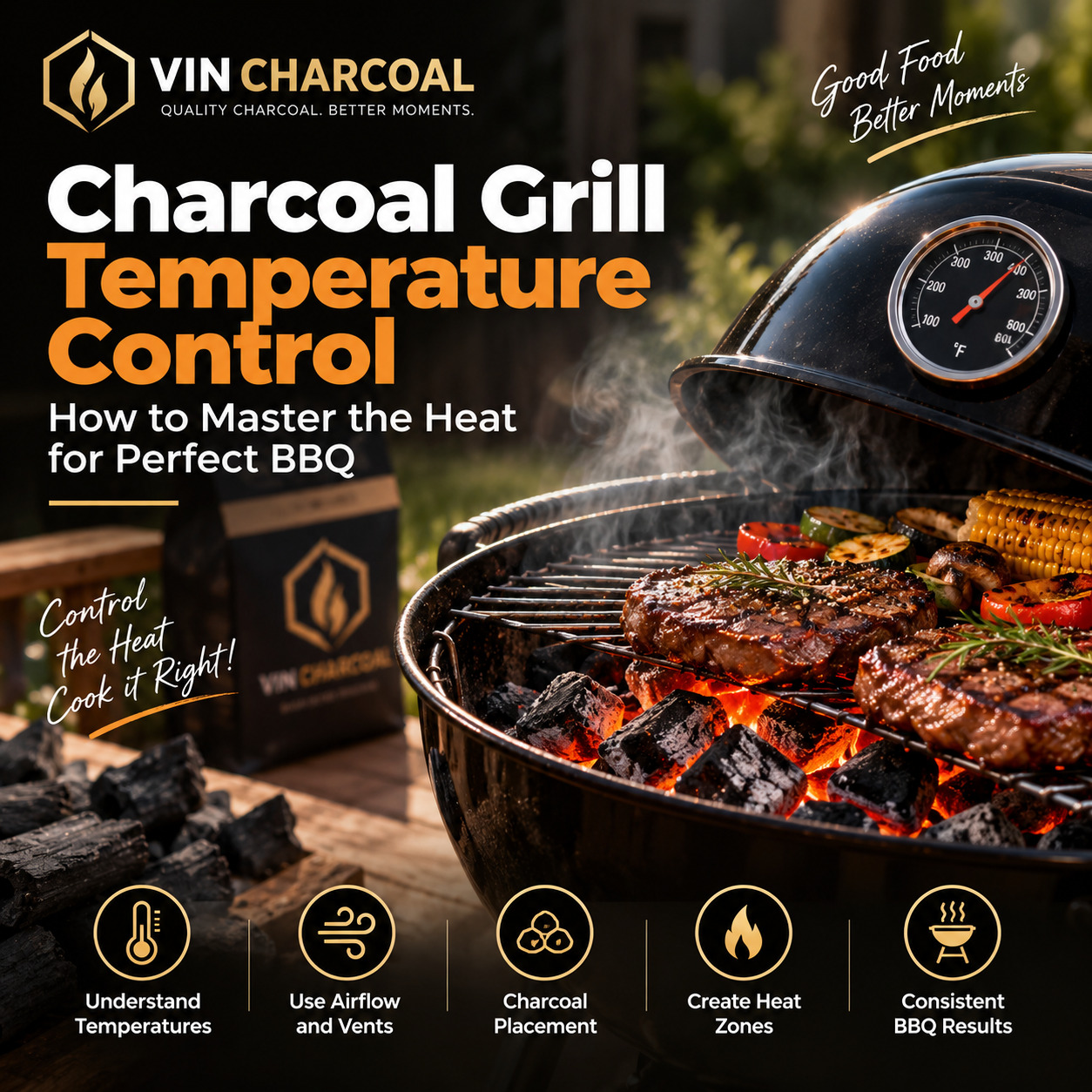
Mastering charcoal grill temperature control is one of the most important skills for anyone who wants better and more consistent BBQ results. Unlike gas or electric grills, where temperature can usually be adjusted by turning a knob, charcoal cooking requires you to manage the relationship between fuel, airflow, charcoal placement and cooking time. That extra involvement is part of what makes charcoal BBQ so rewarding, but it can also be challenging for beginners. A grill that becomes too hot can burn the outside of food before the centre is properly cooked, while a fire that loses too much heat can extend cooking times and produce disappointing results. The good news is that charcoal temperature is not as unpredictable as it may initially seem. Once you understand how oxygen affects burning charcoal, how vents regulate airflow and how different charcoal arrangements create different heat zones, controlling your BBQ becomes much easier. This guide explains the principles behind charcoal heat management and shows you how to maintain the right cooking environment for steaks, chicken, seafood, vegetables and slow BBQ cooking.
Good BBQ is not simply about producing the hottest possible fire. Different foods and cooking methods require different levels of heat, and maintaining the appropriate temperature can be just as important as seasoning or preparation. A steak may benefit from strong direct heat when you want to develop a well-browned exterior, while larger cuts of meat often require a gentler cooking environment for a longer period. Vegetables, chicken and seafood also respond differently to heat, meaning a single grill temperature is unlikely to suit everything you cook. Effective charcoal BBQ temperature control gives you the flexibility to adapt the grill rather than forcing every ingredient to cook under identical conditions. It also reduces the temptation to constantly move food around or repeatedly open the lid because you are unsure what is happening inside the BBQ. When you understand the fire, you can deliberately create hotter and cooler areas, adjust airflow when necessary and plan where each ingredient should be positioned. The result is a more controlled cooking process and a better foundation for consistent BBQ results.
To control a charcoal grill effectively, it helps to understand the basic relationship between charcoal, oxygen and heat. Burning charcoal needs oxygen. When more oxygen reaches the lit charcoal, combustion generally becomes more active and the fire can become hotter. Restricting airflow reduces the available oxygen and can slow the rate at which the charcoal burns. This is why the ventilation system on a charcoal grill is so important. The lower vents usually allow fresh air to enter near the fuel, while upper vents allow hot air, smoke and combustion gases to leave the cooking chamber. Together, these vents create airflow through the grill. Temperature is also affected by how much charcoal is burning, how tightly or loosely the fuel is arranged, the size and design of the BBQ, weather conditions and whether the lid is open or closed. Instead of thinking of charcoal temperature as something controlled by one component, think of the entire grill as a system. The charcoal provides the fuel, oxygen supports combustion, the vents regulate airflow and the grill body helps contain and distribute the resulting heat.
Learning to manage airflow is central to how to control charcoal grill temperature. On a typical kettle-style charcoal grill, air enters through vents near the bottom and exits through vents in the lid. Opening the lower vent allows more oxygen to reach the charcoal, which can encourage a stronger fire. Partially closing it restricts airflow and can reduce the intensity of combustion. The upper vent is also important because the fire needs an effective path for hot air and combustion gases to leave the grill. Completely closing vents while actively cooking can restrict combustion too much and may cause the fire to weaken or eventually extinguish. Make adjustments gradually rather than repeatedly moving vents from fully open to almost closed. Charcoal does not respond instantaneously in the same way as a gas burner, so allow the grill time to stabilise after an adjustment before deciding whether another change is necessary. Every grill behaves slightly differently, and learning the response of your particular BBQ is part of becoming more confident with charcoal cooking.
The charcoal grill vents work together, but they do not necessarily perform identical roles. On many charcoal grills, the bottom vent has a particularly strong influence on how much oxygen reaches the fire because it sits close to the charcoal bed. Opening it further can increase airflow through the fuel, while reducing the opening can help moderate an overly active fire. The top vent helps maintain circulation through the cooking chamber and provides an outlet for hot gases and smoke. During normal cooking, many BBQ users keep the exhaust vent at least partially open and make temperature adjustments primarily through the intake vent, although you should always follow the recommendations for your specific grill. Avoid making several large changes in rapid succession. Adjust a vent, give the grill time to respond and monitor the thermometer before making another adjustment. With practice, you will begin to recognise how particular vent positions affect your BBQ under different conditions. This experience is valuable because charcoal quantity, ambient temperature, wind and the amount of food inside the grill can all influence the final cooking temperature.
The amount of charcoal you light has a major effect on the heat available for cooking. Filling a grill with a large quantity of fully lit charcoal when you only need moderate heat can make temperature management unnecessarily difficult. Conversely, starting with too little fuel may leave you struggling to maintain enough heat for a long cooking session. The appropriate amount depends on the size of the grill, the food being prepared and the cooking method you plan to use. Quick direct grilling typically requires enough lit charcoal to create a concentrated hot zone underneath the food. Longer indirect cooking may use a different arrangement in which the charcoal is positioned to one side or around the edges rather than covering the entire bottom of the grill. There is no universal charcoal quantity that works for every BBQ because grill dimensions and fuel characteristics vary considerably. The more useful principle is to match the amount of fuel to the task. Learning how much charcoal your own grill requires for common cooking situations will eventually make temperature management faster, easier and more predictable.
Charcoal placement is one of the simplest ways to gain more control over a BBQ. Instead of spreading lit charcoal evenly across the entire grill, you can arrange the fuel to create different temperature areas. A common approach is a two-zone fire, where most or all of the charcoal is positioned on one side of the grill while the other side contains little or no charcoal directly underneath the cooking grate. The charcoal side becomes the direct, high-heat zone, while the opposite side provides an indirect cooking area. This arrangement gives you much more flexibility than cooking over a uniform bed of charcoal. Food can begin over direct heat to develop colour and then be moved to the cooler side to continue cooking more gently. If flare-ups occur, food can also be moved temporarily away from the hottest area rather than removing it from the grill completely. For anyone learning charcoal heat control, a two-zone arrangement is one of the most useful techniques because it creates both strong and moderate cooking environments inside a single BBQ.
Direct and indirect cooking are closely connected to temperature management, but they describe where the food sits relative to the charcoal rather than simply a particular thermometer reading. With direct heat, food is positioned above the burning charcoal and receives strong radiant heat from below. This approach is useful for foods that cook relatively quickly and benefit from browning, including steaks, burgers, sausages, kebabs and some vegetables. With indirect heat, the charcoal is positioned away from the food, and the grill lid helps create a more oven-like cooking environment. This technique is particularly useful for thicker foods or longer cooking sessions where intense heat directly underneath the food could overcook the exterior. A well-designed charcoal setup can combine both methods at the same time. Understanding this distinction is essential because temperature control is not only about making the entire grill hotter or cooler. Often, the better solution is simply to move the food between different heat zones while maintaining a stable fire.
A thermometer removes much of the guesswork from BBQ temperature control. Many charcoal grills have a thermometer built into the lid, which provides a useful indication of the general temperature inside the cooking chamber. However, the temperature at the lid may differ from the temperature at cooking-grate level, particularly when the grill contains distinct heat zones. For more precise cooking, a grate-level probe can help you monitor the environment closer to where the food is actually positioned. A separate food thermometer is equally important because grill temperature and internal food temperature measure different things. The grill thermometer tells you about the cooking environment, while a food thermometer helps determine the internal temperature of meat or other foods. Rather than relying solely on time estimates or visual appearance, combining these tools gives you more information about what is happening inside the BBQ. This becomes especially valuable when cooking larger pieces of meat, where the exterior appearance may not accurately indicate whether the centre has reached a safe and desired internal temperature.
Recipes often refer to low, medium or high heat, but these descriptions should be treated as useful ranges rather than exact universal settings because grills and thermometers can differ. As a general BBQ framework, lower-temperature cooking is often used for longer indirect methods, moderate temperatures are useful for versatile roasting-style cooking, and higher temperatures are commonly used for direct grilling and searing. Instead of becoming overly focused on maintaining one exact number every second, aim to keep the grill within an appropriate range for the food you are preparing. Small temperature fluctuations are normal with charcoal. The important skill is recognising whether the fire is gradually moving outside your desired range and responding before the difference becomes significant. A thermometer, controlled airflow and thoughtful charcoal placement make this much easier. Over time, you will also learn how quickly your particular BBQ rises in temperature after adding oxygen or fuel and how long it takes to settle after the vents are adjusted.
If your grill temperature is falling below the desired range, first determine whether the charcoal has sufficient airflow. Check that the intake vents are not accidentally closed and that excessive ash is not restricting air from reaching the fuel. Opening the intake vent further can provide additional oxygen and encourage more active combustion. If airflow is adequate but the existing charcoal is nearly exhausted, additional fuel may be required, particularly during a long cooking session. When adding charcoal, consider how quickly you need the temperature to recover and follow safe lighting practices appropriate to your grill. Avoid making several aggressive adjustments at once because the temperature may continue rising after you think the problem has been solved. Charcoal fires have a delayed response compared with gas burners. Make one deliberate change, monitor the result and then decide whether another adjustment is necessary. This patient approach helps prevent the common cycle of letting the grill become too cool, opening everything fully, overshooting the target temperature and then restricting the fire too aggressively.
When a charcoal grill becomes too hot, reducing the oxygen reaching the fire is usually more effective than constantly opening the lid. Partially closing the intake vent can slow combustion, although you should avoid completely shutting down airflow unless your grill manufacturer recommends doing so for a particular purpose. Another effective strategy is to move food away from the hottest charcoal and into an indirect zone while the fire stabilises. If you are using an excessive amount of charcoal for the cooking task, vent adjustments alone may take time to produce the desired reduction because a large mass of burning fuel continues to release heat. This is why starting with an appropriate amount of charcoal is preferable to trying to control an unnecessarily large fire later. Resist the urge to repeatedly open and close the lid in an attempt to regulate temperature. Opening the grill changes airflow and releases accumulated heat, creating additional variables. A controlled combination of vent adjustment, fuel management and heat-zone positioning produces more predictable results.
Every time you open a charcoal grill, you change its cooking environment. Heat escapes immediately, but the open grill may also expose the charcoal to additional oxygen. Depending on the design of the BBQ and how long the lid remains open, this can temporarily influence the fire in ways that make temperature readings less stable. For this reason, repeatedly lifting the lid to inspect food can make charcoal grill temperature control more difficult. Prepare utensils, sauces and ingredients before opening the BBQ so you can perform necessary tasks efficiently. When checking internal food temperature, insert the thermometer, take the measurement and close the grill rather than leaving the lid open unnecessarily. This does not mean you should never inspect your food; it simply means that deliberate lid management helps preserve a more consistent cooking environment. When cooking indirectly for longer periods, stable conditions become especially useful because the grill can operate more predictably without frequent interruptions.
Outdoor conditions can have a noticeable effect on a charcoal BBQ. Cold weather may increase the amount of energy required to maintain the desired cooking environment, while strong wind can change airflow through the vents and cause charcoal to burn differently. Rain can cool the exterior of the grill and make the cooking process more difficult, while very hot weather may alter how quickly your BBQ reaches its target range. Rather than following charcoal quantities and vent positions as rigid formulas, treat them as starting points that may need adjustment according to the conditions. Position the BBQ in a stable outdoor location where it is protected from unnecessary wind exposure while still maintaining the clearances and ventilation required by the manufacturer. Never move a hot charcoal grill into an enclosed space simply because the weather changes. Charcoal produces carbon monoxide during combustion and should only be used in appropriately ventilated environments according to the equipment manufacturer's instructions and local fire-safety requirements.
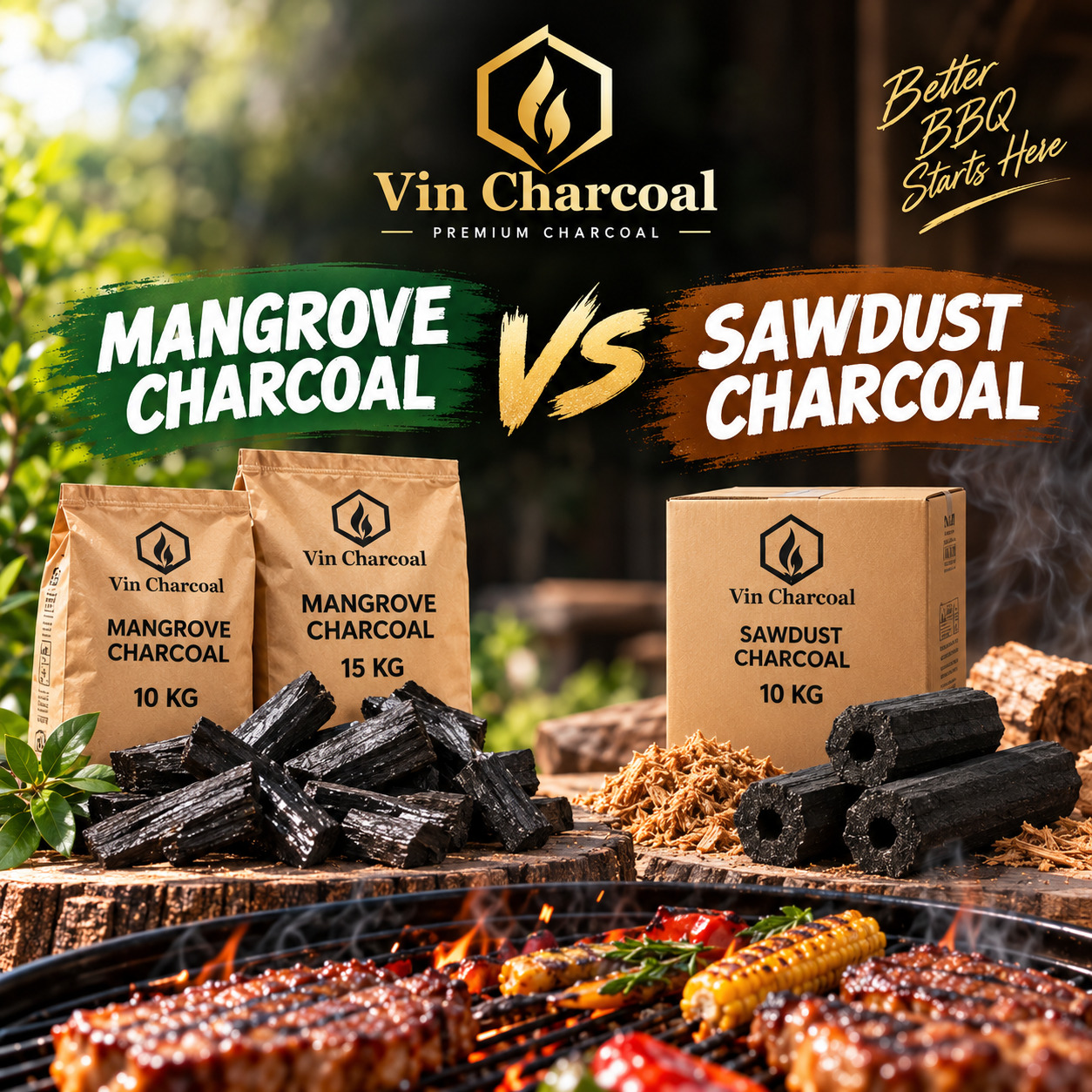
The fuel you choose is another part of temperature management because different charcoal products can vary in size, shape, density and burning behaviour. Vin Charcoal supplies both Mangrove Charcoal and Sawdust Charcoal for charcoal cooking applications. Mangrove Charcoal consists of natural wood-charcoal pieces, meaning individual pieces can vary naturally in shape and dimensions. It can be suitable for BBQ users who prefer traditional lump-style charcoal and strong cooking heat. Vin Charcoal Mangrove Charcoal is available in 10 kg and 15 kg sizes. Sawdust Charcoal is produced from compressed sawdust and has a more uniform manufactured shape, which can make pieces straightforward to arrange inside suitable charcoal stoves and BBQs. Vin Charcoal Sawdust Charcoal is supplied in 10 kg boxes. Rather than assuming one charcoal type is universally best, consider the design of your grill, your preferred cooking method and how you like to arrange and manage the fire. Consistency also improves as you become familiar with the characteristics of the charcoal you regularly use.
Different foods benefit from different heat strategies, which is why a two-zone charcoal fire is so useful. Steaks and burgers often benefit from a hotter direct zone that can brown the exterior efficiently, followed by movement to a cooler zone when additional cooking is required. Chicken can require more careful heat management because excessive direct heat may darken the outside before thicker portions are properly cooked. Indirect cooking can therefore be useful for larger chicken pieces, with direct heat used strategically for finishing. Seafood frequently cooks quickly and can benefit from controlled direct heat, while delicate items require attention to prevent overcooking. Vegetables are extremely versatile: corn, capsicum, zucchini, mushrooms and similar ingredients can be cooked at different positions depending on their size and desired texture. Whatever you are cooking, use an appropriate food thermometer when internal temperature is relevant and follow current food-safety guidance. Mastering charcoal BBQ is less about memorising one temperature for every ingredient and more about learning how to create the right cooking environment for each food.
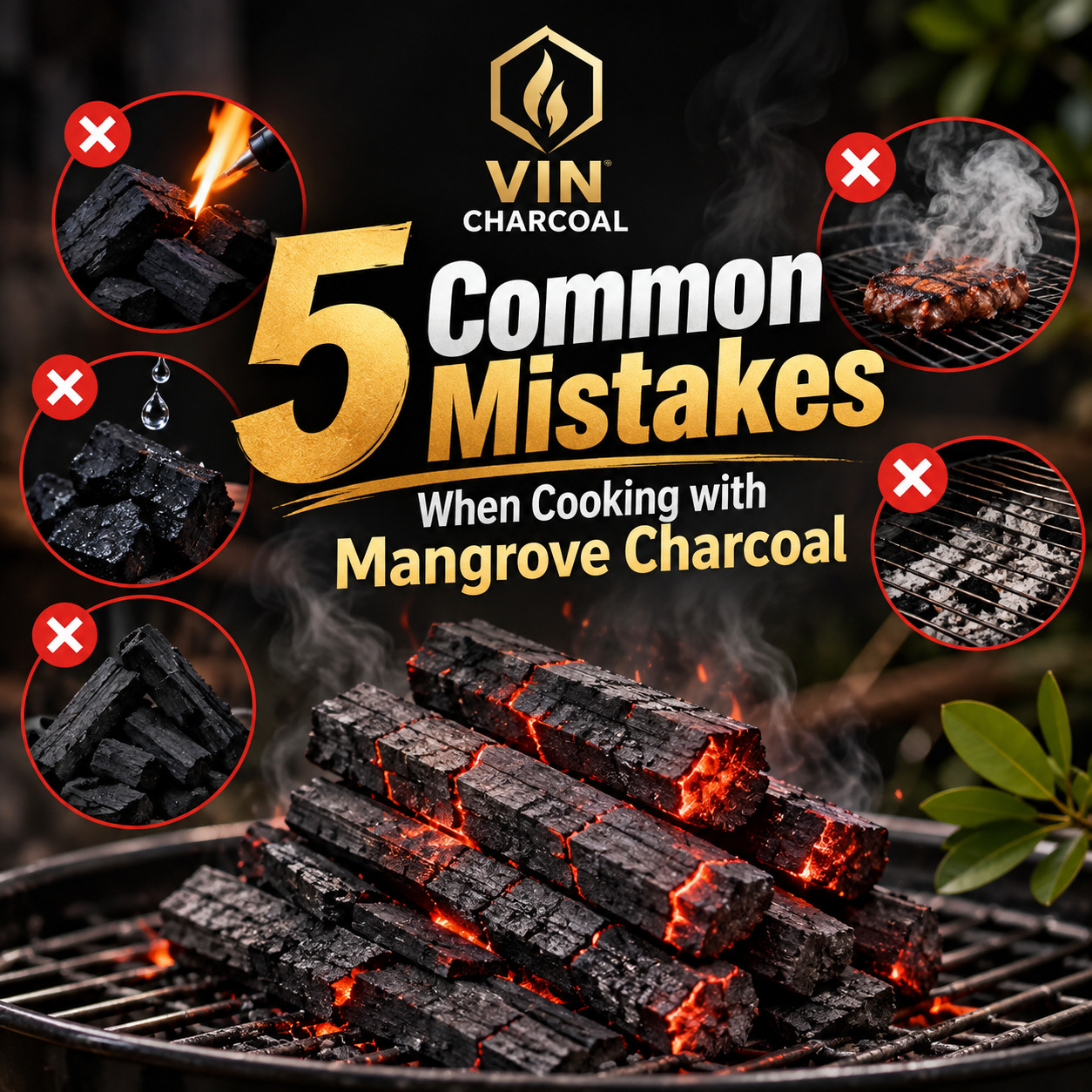
One of the most common mistakes is making too many changes too quickly. A cook sees the thermometer falling, opens the vents completely, adds more charcoal and removes the lid, only to discover several minutes later that the grill is now much hotter than intended. Another common mistake is starting with far more charcoal than the cooking task requires, which can make moderate-temperature cooking unnecessarily difficult. Poor ash management can also restrict airflow, while constantly opening the lid creates an unstable cooking environment. Some users focus exclusively on the thermometer while ignoring charcoal placement, even though moving food to a different heat zone may solve the immediate problem without changing the entire grill temperature. Finally, beginners sometimes expect charcoal to behave like gas and respond instantly to every adjustment. It does not. Good charcoal heat control requires patience. Make small changes, understand what each adjustment is intended to achieve and allow enough time to observe the result before making another decision.
Longer BBQ sessions require a slightly different approach from quick direct grilling because maintaining a stable fire becomes more important than producing maximum heat. Start with a deliberate charcoal arrangement that supports indirect cooking and avoid lighting more fuel than necessary at the beginning. Once the grill reaches the desired temperature range, make small vent adjustments rather than large changes. Monitor the thermometer periodically and watch for gradual trends rather than reacting to every minor fluctuation. During an extended cook, charcoal will eventually be consumed, so additional fuel may be necessary depending on the grill, charcoal arrangement and total cooking time. Ash can also accumulate underneath the fuel and interfere with airflow on some BBQ designs. Familiarity with your grill is particularly valuable here because two charcoal cookers of different sizes and construction may behave very differently even when using similar amounts of fuel. The goal is not to produce a perfectly flat temperature graph but to maintain a suitable and reasonably stable cooking environment throughout the session.
Temperature control should always be combined with safe charcoal handling. Charcoal produces carbon monoxide while burning, so a charcoal grill should never be used inside a house, garage, tent or other enclosed area. Operate your BBQ outdoors in a properly ventilated location and follow the manufacturer's requirements for clearance from walls, combustible materials and other objects. Keep children and pets away from the cooking area, use appropriate BBQ tools and heat-resistant equipment where required, and never leave an active charcoal fire unattended. Be particularly careful when adjusting vents, handling hot lids or adding fuel because metal components can become extremely hot. After cooking, extinguish the charcoal using the method recommended by your grill manufacturer and allow the fuel and ash to cool completely before disposal. Charcoal can remain hot for a surprisingly long time even when no visible flame is present, so never assume that dark-looking coals or ash are safe to touch immediately after cooking.
Learning charcoal grill temperature control transforms charcoal cooking from guesswork into a much more deliberate process. The fundamental principles are straightforward: charcoal provides the fuel, oxygen supports combustion, vents manage airflow and charcoal placement determines where the strongest heat is concentrated. Once you understand how these elements interact, you can create direct and indirect cooking zones, increase or reduce heat more confidently and choose a temperature range appropriate to the food you are preparing. A good thermometer helps you monitor the cooking environment, while patience prevents the overcorrection that often causes temperature swings. You do not need to achieve an identical temperature every time you cook; instead, aim to understand how your BBQ responds and make controlled adjustments when necessary. Whether you are grilling steaks for a quick meal or preparing a longer weekend BBQ, learning to manage the fire is one of the most valuable charcoal-cooking skills you can develop. With suitable equipment, appropriate charcoal and good heat management, every BBQ becomes an opportunity to improve your technique and produce more consistent results.
The temperature of a charcoal grill is primarily managed through the amount of burning fuel, airflow and charcoal placement. On grills with adjustable ventilation, the intake vent regulates how much oxygen can reach the charcoal, while the exhaust vent allows hot gases and smoke to leave the cooking chamber. Opening the intake generally encourages stronger combustion, while partially restricting it can reduce the intensity of the fire. Charcoal can also be arranged into direct and indirect zones so food can be moved between hotter and cooler areas without dramatically changing the entire grill. Because charcoal responds gradually, avoid making repeated large adjustments. Change one variable, allow the BBQ time to respond and monitor the thermometer before making another adjustment. Your grill manufacturer's instructions should always take priority because vent systems and recommended operating procedures differ between models.
A charcoal grill may become excessively hot because too much charcoal was lit, the vents are allowing a large amount of oxygen into the fire or weather conditions are increasing airflow through the grill. Begin by checking the charcoal quantity and vent positions. If the fire is stronger than required, gradually reduce the intake airflow rather than making abrupt changes. Moving food into an indirect zone can protect it while the grill temperature stabilises. Avoid repeatedly opening the lid because doing so changes both the heat inside the cooking chamber and the amount of oxygen available to the charcoal. Prevention is often easier than correction: start with an amount of charcoal appropriate to your cooking method and increase heat only when required.
A falling temperature can indicate that the charcoal is running low, insufficient oxygen is reaching the fire or ash is interfering with airflow. Check whether the vents are appropriately open and whether the grill's airflow path is obstructed. During longer cooking sessions, the original fuel may simply be reaching the end of its useful burn and additional charcoal may be required. Cold, windy or wet weather can also affect how a BBQ behaves outdoors. Instead of immediately adding a large quantity of fuel, identify the likely cause first. If adequate charcoal remains but airflow is restricted, adding more fuel may not solve the underlying problem. Good temperature management comes from balancing fuel and oxygen rather than relying on either one alone.
There is no single charcoal that is ideal for every grill or cooking method. Natural lump-style charcoal and compressed charcoal products have different physical characteristics, and BBQ users may prefer one or the other depending on their equipment and cooking style. Vin Charcoal offers Mangrove Charcoal in 10 kg and 15 kg sizes as well as Sawdust Charcoal in 10 kg boxes. Mangrove Charcoal provides natural wood-charcoal pieces, while Sawdust Charcoal has a more uniform compressed shape. Whichever option you choose, becoming familiar with how that particular charcoal behaves in your own grill is one of the best ways to improve consistency.
Vin Charcoal — Quality Charcoal. Better Moments.
For charcoal product enquiries, BBQ use or wholesale requirements, contact Vin Charcoal by VD Import Export, Springvale VIC 3171, Melbourne, Australia.

I started VinCharcoal not simply from a business perspective, but from a genuine interest in charcoal and the value that a well-made product can bring to everyday cooking, grilling, and professional use. To me, charcoal is more than just a source of heat. Its quality reflects the raw materials, production process, craftsmanship, and attention to detail behind every piece. Through VinCharcoal, I want to share practical knowledge about charcoal, explore what makes a truly reliable product, and help customers better understand the importance of choosing the right charcoal for their needs.

 Loading...
 Loading...
