Published: 16:26 10-09-2026 Article ID: VT2026-35
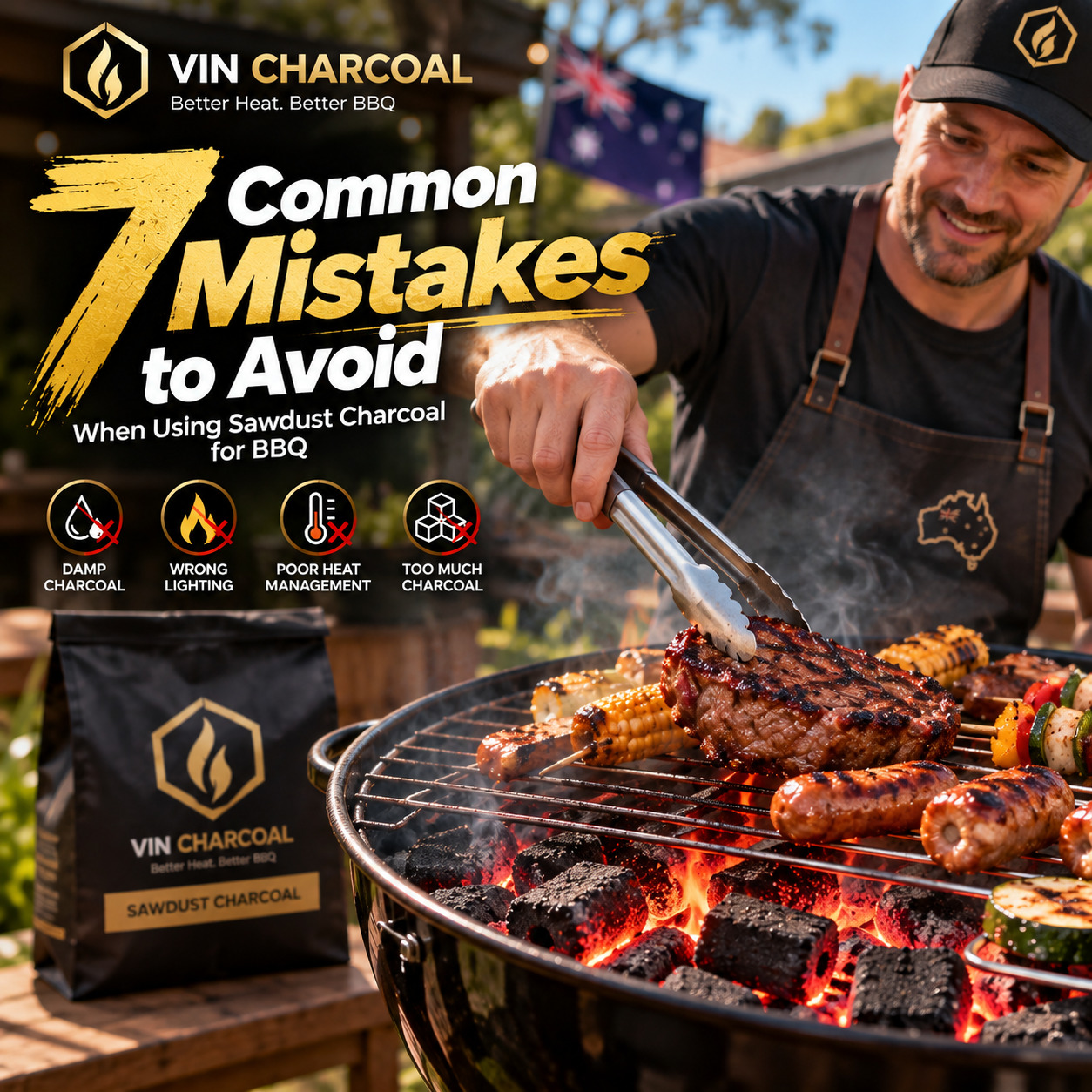
A great charcoal BBQ is not only about choosing quality meat or having the right grill. The way you prepare, light and manage your charcoal can have a major impact on the cooking process. Sawdust charcoal is a practical option for BBQ, grilling and outdoor cooking, but like any charcoal fuel, it needs to be used correctly to achieve consistent results.
Sawdust charcoal is generally made from compressed sawdust that has been carbonised and formed into uniform pieces. Its consistent shape makes it easy to arrange inside many charcoal grills and stoves. However, common mistakes such as using damp charcoal, rushing the lighting process or restricting airflow can make your BBQ more difficult than it needs to be.
If you are planning to use sawdust charcoal for BBQ, here are seven common mistakes to avoid, along with practical tips to help you build a better fire and enjoy a smoother grilling experience.
Sawdust charcoal is produced using sawdust or other suitable wood residues that are compressed into consistent shapes before or as part of the charcoal production process. Unlike natural lump charcoal, which naturally varies in size and shape, compressed sawdust charcoal generally has a more uniform appearance.
This consistency can make charcoal arrangement easier because individual pieces can be positioned with relatively even spacing inside a BBQ or charcoal stove. Proper spacing is important because charcoal requires oxygen to burn effectively. Packing the pieces too tightly can restrict airflow, while a thoughtful arrangement allows air to circulate through the charcoal bed.
Sawdust charcoal can be used for BBQ, grilling and other compatible charcoal cooking applications. However, good results still depend on proper lighting, airflow, charcoal quantity and heat management. Understanding these fundamentals is more useful than simply adding as much charcoal as possible and hoping for a hotter grill.
One of the most important mistakes to avoid is allowing your sawdust charcoal to become damp. Charcoal should be kept dry because unnecessary moisture can make it harder to establish a reliable fire. If an opened bag is left outside, stored directly on a damp floor or exposed to rain and high humidity, the charcoal may not perform as expected when it is time to BBQ.
Store your charcoal in a dry, protected location and keep opened packaging securely closed between cooking sessions. If necessary, place the remaining charcoal in an appropriate dry storage container. A covered shed, garage or other suitable protected area can work well as long as the charcoal is stored safely away from ignition sources.
Before starting your BBQ, inspect the charcoal you intend to use. Taking a few minutes to check your fuel before lighting can save considerable frustration later. Good charcoal storage is a simple habit that helps keep your BBQ fuel ready when you need it.
Another common mistake is trying to cook immediately after the first pieces of charcoal begin to burn. A newly lit charcoal fire needs time to develop before it provides a useful cooking environment. Starting too early can leave you working with uneven heat while parts of the charcoal bed are still establishing.
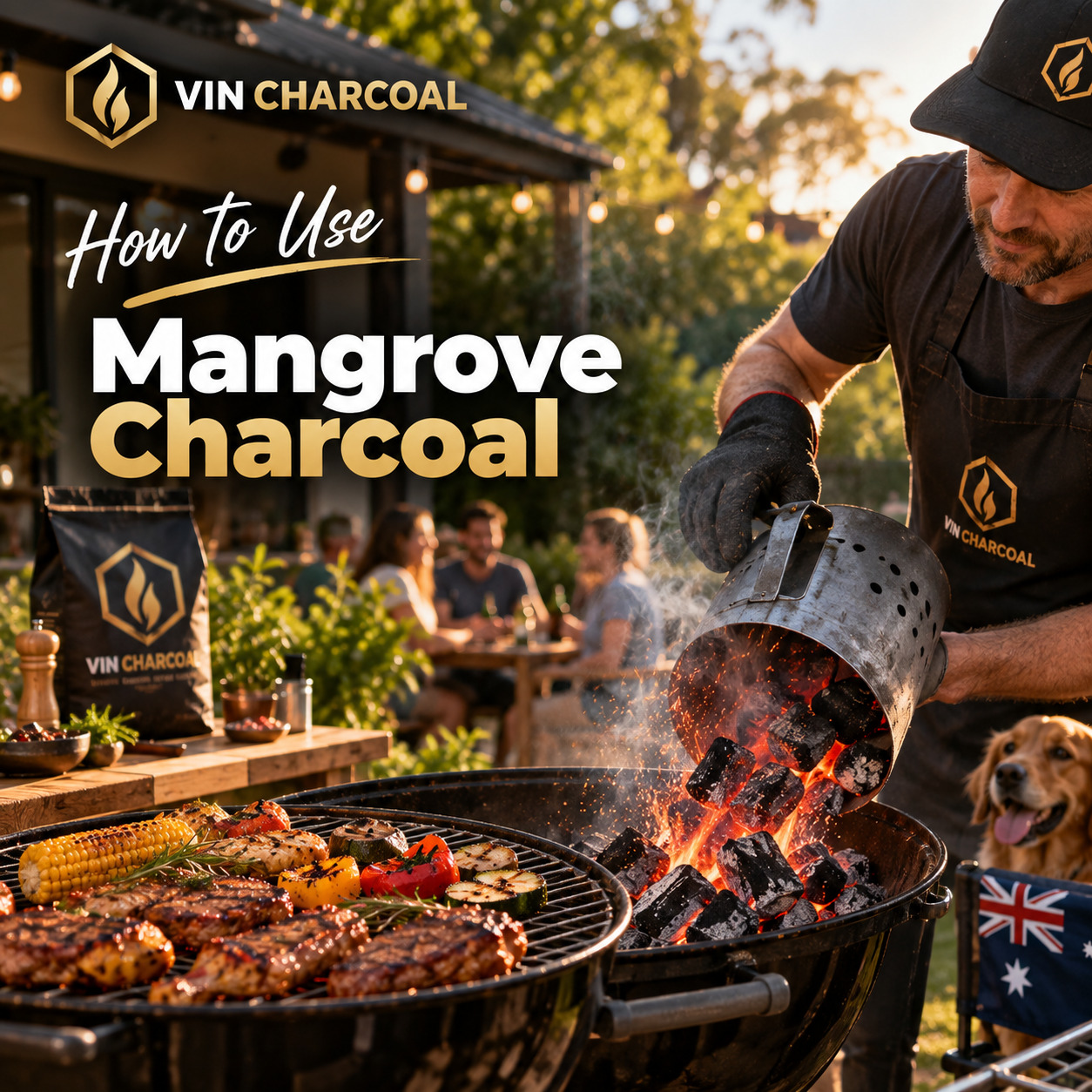
When learning how to light sawdust charcoal, use a suitable method such as a charcoal chimney starter or appropriate BBQ fire starters according to their instructions. A chimney starter can be particularly useful because its design encourages airflow from underneath the charcoal, helping the fire move through the fuel.
Allow the charcoal to establish before arranging it for cooking. You should begin to see glowing areas developing as the fire progresses. The exact preparation time will depend on factors such as the quantity of charcoal, grill design, airflow and weather conditions.
Avoid petrol, methylated spirits and other inappropriate flammable liquids. Use products specifically intended for starting charcoal and always follow their safety instructions.
It can be tempting to assume that more charcoal automatically means a better BBQ. In reality, filling the grill with more sawdust charcoal than you actually need can make heat management unnecessarily difficult and waste fuel.
The appropriate amount of charcoal depends on what you are cooking, how much food you have, the size of the BBQ and how long the cooking session is expected to last. A small grill preparing a few steaks or sausages will normally have different fuel requirements from a large BBQ preparing food for a group.
Instead of automatically filling the entire charcoal chamber, start by considering the cooking task. If you are preparing food quickly over direct heat, you may only need a concentrated charcoal zone. For a longer session, you may require a different arrangement and sufficient fuel to maintain the cooking environment.
As you become familiar with your BBQ, pay attention to how much charcoal you actually use. Experience with your own equipment is one of the best ways to improve fuel efficiency.
Charcoal placement is just as important as charcoal quantity. One common BBQ mistake is spreading every piece evenly across the entire bottom of the grill without considering whether different cooking zones would be more useful.
A better approach for many BBQ sessions is to create direct and indirect heat zones. Concentrate your hot sawdust charcoal beneath one section of the cooking grate while leaving another section with little or no charcoal directly underneath it.
The area above the charcoal becomes your direct grilling zone. This section can be used for foods that benefit from stronger radiant heat, such as steaks, burgers, sausages and some vegetables. The area without charcoal underneath becomes an indirect zone where food can continue cooking away from the strongest heat.
This setup gives you somewhere to move food if it begins cooking too quickly. Instead of constantly changing the entire fire, you can simply reposition ingredients between different sections of the grill.
Charcoal needs oxygen to continue burning, which means airflow plays an important role in charcoal BBQ cooking. Ignoring your grill vents can make maintaining the desired heat much more difficult.
Many kettle grills and enclosed charcoal BBQs include lower and upper adjustable vents. Air entering through the lower vents supplies oxygen to the burning charcoal, while the upper vent allows hot air and combustion gases to move through the grill.
If airflow is heavily restricted, the fire may weaken. Increasing airflow can encourage more active combustion. However, constantly making large vent adjustments can also make your BBQ harder to manage because the charcoal needs time to respond.
Make gradual changes and observe the result before adjusting again. A grill thermometer can be helpful when learning how different vent positions affect your BBQ.
Also remove excessive ash from previous cooking sessions before lighting new charcoal. Accumulated ash can obstruct lower ventilation openings and reduce airflow through the charcoal bed.
Another common mistake is assuming that every ingredient should stay directly above the hottest charcoal throughout the entire cooking process.
Different foods respond differently to heat. A steak may benefit from strong direct heat during part of the cooking process, while thicker chicken pieces may need more time away from the most intense section of the fire. Seafood and some vegetables can cook relatively quickly and may require even more careful attention.
This is where a two-zone BBQ becomes particularly valuable. Start foods over direct heat when appropriate, then move them to the indirect side if the exterior is cooking faster than the centre.
You can also use both zones simultaneously when preparing several foods. Sausages might cook in one section while vegetables occupy another, with a cooler area available whenever something needs gentler heat.
Good BBQ cooking is not about maintaining maximum heat everywhere. It is about having enough control to match the cooking environment to the food.
The final mistake often happens after the BBQ is finished. An opened bag of sawdust charcoal may be left outside or stored somewhere exposed to moisture until the next cooking session.
Proper storage helps protect your charcoal between uses. Once you have finished cooking and the remaining unused charcoal is safely away from the BBQ, keep it in its packaging or an appropriate dry container and store it in a protected location.
Do not store charcoal next to open flames, heaters or other ignition sources. Always follow the product instructions and general fire-safety practices when deciding where to keep charcoal.
It is also important to distinguish unused charcoal from hot charcoal remaining inside the BBQ. Never handle, package or dispose of charcoal from the grill until it has been fully extinguished and cooled according to your BBQ manufacturer's instructions.
Charcoal can remain dangerously hot even when visible flames are gone, so give it sufficient time before handling ash or used fuel.
Avoiding these seven mistakes gives you a strong foundation for using sawdust charcoal for BBQ more effectively. Start with dry charcoal, use a suitable lighting method and allow the fire to establish before you begin cooking. Choose an amount of charcoal that matches your BBQ rather than automatically using as much fuel as possible.
Once the charcoal is ready, think about placement. Creating separate direct and indirect cooking zones can make your grill significantly easier to manage. You can sear food over stronger heat, move it to a cooler section when necessary and prepare different ingredients simultaneously.
Airflow should also be treated as part of your cooking process. Keep ventilation openings clear, make gradual vent adjustments and give the charcoal time to respond.
Most importantly, learn how your own BBQ behaves. Grill size, vent design, charcoal quantity, outdoor temperature and even wind can influence the cooking environment. The more familiar you become with your equipment, the easier it becomes to make useful adjustments.
Sawdust charcoal can be a practical choice for BBQ and grilling when used in suitable charcoal cooking equipment. Its compressed form typically provides relatively consistent pieces, making it straightforward to arrange inside many charcoal grills and stoves.
However, the quality of the BBQ experience depends on more than the type of charcoal alone. Proper lighting, sufficient airflow, sensible charcoal placement and good cooking technique all play important roles.
Rather than asking only whether a charcoal product is suitable, consider how you intend to cook with it. A good charcoal setup should give you enough heat for direct grilling while also allowing you to create a cooler area when needed.
Always check the recommendations provided by your BBQ or stove manufacturer before using a particular charcoal fuel.
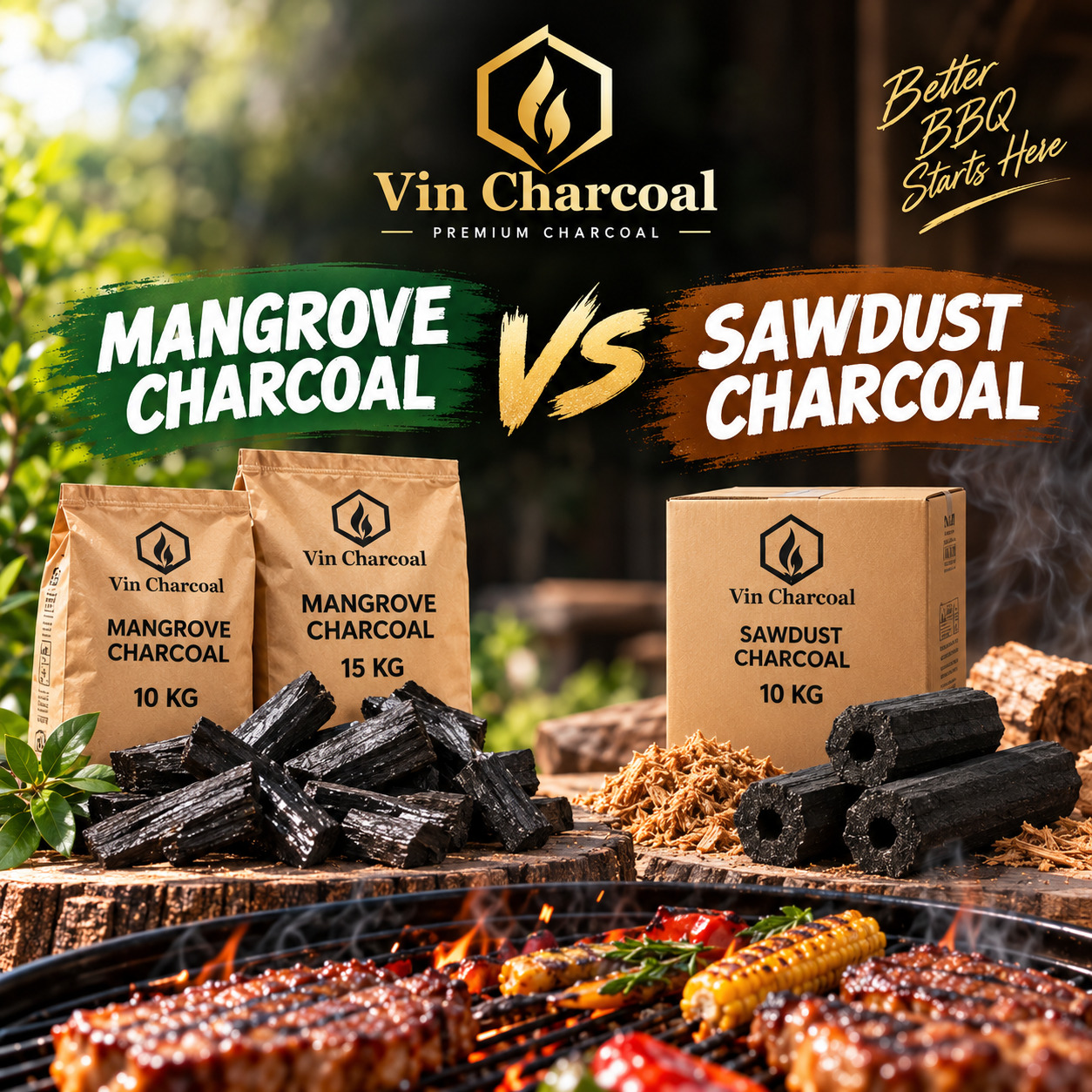
Sawdust charcoal and mangrove charcoal can both be used for compatible BBQ and charcoal cooking applications, but their physical characteristics are different.
Sawdust Charcoal is made from compressed material and therefore generally has a more regular shape. Mangrove Charcoal is natural wood charcoal, so individual pieces naturally vary in size and shape.
The right option depends on your cooking equipment, the way you prefer to arrange your charcoal and your individual BBQ requirements. Some users appreciate the uniform format of compressed charcoal, while others prefer working with natural wood-charcoal pieces.
VINCHARCOAL supplies both Sawdust Charcoal and Mangrove Charcoal, giving BBQ users different options depending on their cooking requirements. VINCHARCOAL Sawdust Charcoal is available in a 10 kg boxed format, while Mangrove Charcoal is available in 10 kg and 15 kg sizes.
Safety should always be part of charcoal cooking. Burning charcoal produces carbon monoxide, so outdoor charcoal BBQs should never be operated inside homes, garages, tents or other enclosed spaces.
Set up your BBQ outdoors in a properly ventilated location on a stable and suitable surface. Keep it away from combustible materials and follow the safety clearances recommended by the grill manufacturer.
Children and pets should be kept away from the cooking area, and an active charcoal BBQ should never be left unattended. Use appropriate BBQ tools when handling food or making adjustments near hot charcoal.
When cooking is complete, extinguish the charcoal according to the manufacturer's instructions and wait until the charcoal and ash are completely cool before handling or disposal.
A charcoal chimney starter or suitable BBQ fire starter can be used to establish sawdust charcoal. Allow sufficient airflow and give the charcoal time to develop into an established fire before arranging it for cooking. Avoid inappropriate accelerants such as petrol or methylated spirits and always follow the instructions supplied with your BBQ and fire-lighting products.
There is no single amount that works for every BBQ. The quantity depends on grill size, food quantity, desired cooking heat and the expected length of the cooking session. Rather than filling the grill automatically, use an amount appropriate to your cooking requirements and adjust based on experience with your particular BBQ.
Yes, sawdust charcoal can be used for grilling steak in suitable charcoal BBQ equipment. Creating a strong direct-heat zone allows you to grill over the charcoal, while an indirect section gives you somewhere to move thicker steaks if they need additional cooking away from the strongest heat.
Keep unused sawdust charcoal dry and protected from rain and excessive moisture. Close opened packaging securely or use a suitable dry storage container. Store charcoal away from ignition sources and never package, handle or dispose of charcoal removed from a BBQ until it has been completely extinguished and cooled.
Using sawdust charcoal for BBQ does not need to be complicated. Many problems can be avoided by focusing on a few fundamentals: keep your charcoal dry, allow enough time for lighting, avoid using unnecessary amounts of fuel, arrange the charcoal according to your cooking method and pay attention to airflow.
Creating direct and indirect heat zones can give you much more flexibility when grilling steaks, chicken, sausages, seafood and vegetables. At the same time, learning how your particular BBQ responds to vent adjustments and charcoal quantity will help you become more confident with every cooking session.
VINCHARCOAL supplies quality Sawdust Charcoal in 10 kg boxes for BBQ, grilling, cooking and commercial food applications. For customers who prefer natural wood charcoal, VINCHARCOAL also supplies Mangrove Charcoal in 10 kg and 15 kg sizes.
VINCHARCOAL — Better Heat. Better BBQ.
📍 Springvale, Melbourne VIC 3171
📞 0492 345 679
📧 contact@vincharcoal.com
🌐 vincharcoal.com

I started VinCharcoal not simply from a business perspective, but from a genuine interest in charcoal and the value that a well-made product can bring to everyday cooking, grilling, and professional use. To me, charcoal is more than just a source of heat. Its quality reflects the raw materials, production process, craftsmanship, and attention to detail behind every piece. Through VinCharcoal, I want to share practical knowledge about charcoal, explore what makes a truly reliable product, and help customers better understand the importance of choosing the right charcoal for their needs.
 Loading...
 Loading...
