Published: 11:43 12-09-2026 Article ID: VT2026-37
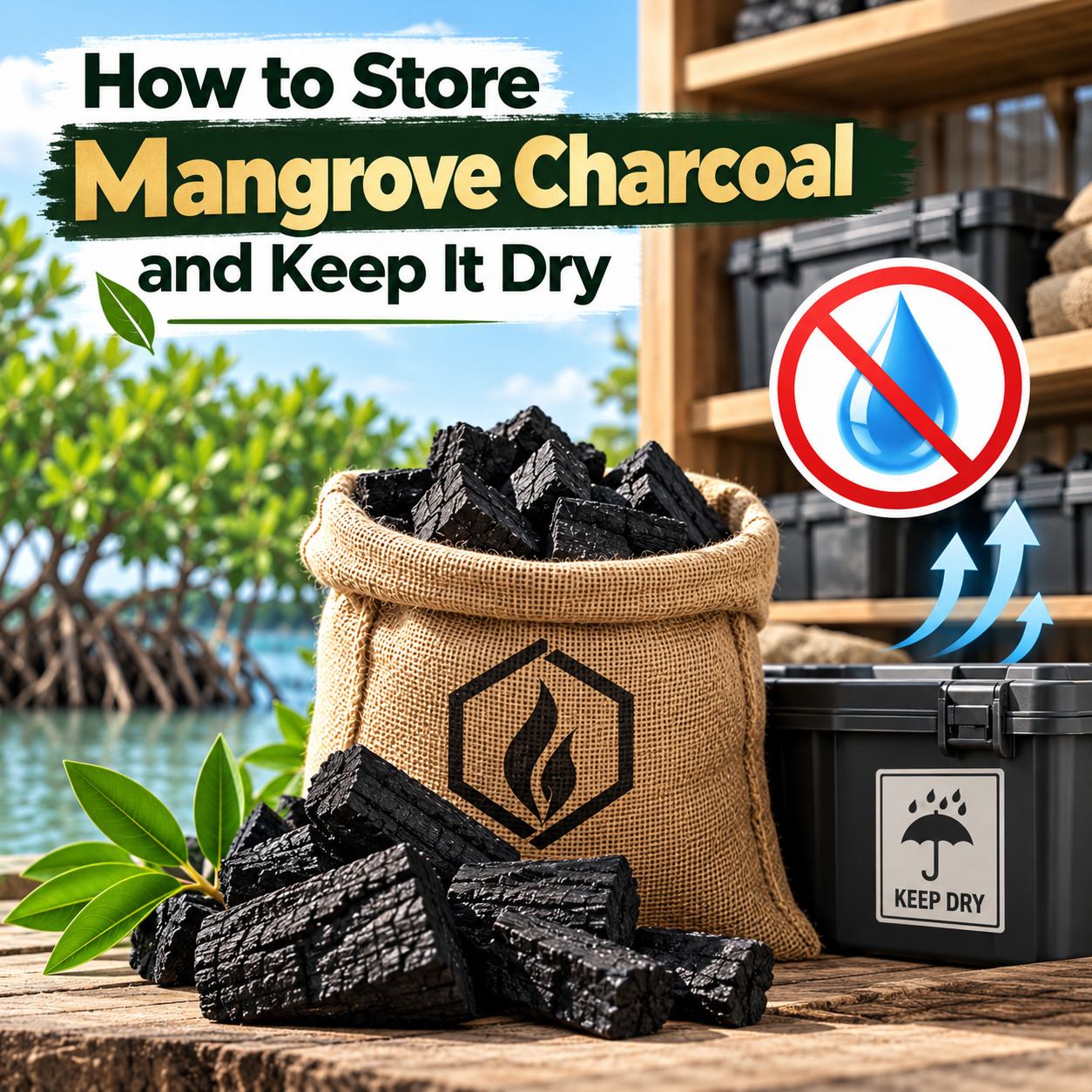
Mangrove charcoal is valued for its high heat, long burning time, and stable performance. However, even high-quality charcoal can lose some of its effectiveness when it is stored incorrectly. Moisture is one of the biggest problems because charcoal can absorb humidity from the surrounding environment.
Knowing how to store mangrove charcoal properly can help preserve its quality, make ignition easier, and maintain consistent burning performance. This is particularly important for charcoal distributors, restaurants, BBQ businesses, and households that store charcoal for extended periods.
In this guide, we will explain the best ways to store mangrove charcoal, how to protect it from moisture, and what mistakes you should avoid.
Charcoal may look extremely durable, but its porous structure means that storage conditions still matter.
When charcoal is exposed to moisture or high humidity for a long period, it can absorb water from the surrounding environment. As a result, the charcoal may become more difficult to ignite and may take longer to reach the desired cooking temperature.
Proper storage helps protect the charcoal from unnecessary moisture and environmental contamination.
For businesses purchasing mangrove charcoal in bulk, storage becomes even more important. A shipment may contain hundreds or thousands of bags, and poor warehouse conditions can affect a significant amount of inventory.
Good storage practices help maintain:
For these reasons, charcoal storage should be considered part of overall product quality management.
The most important rule for storing mangrove charcoal is simple: keep it dry.
Charcoal should be stored indoors whenever possible, especially in regions with high humidity or frequent rainfall.
A warehouse, storage room, garage, or covered storage area is usually preferable to leaving charcoal outdoors.
The storage area should have a solid roof and provide protection against rain, groundwater, condensation, and direct exposure to weather.
Before placing charcoal in a warehouse, check for potential sources of moisture such as leaking roofs, damp walls, water pipes, or wet floors.
Even when charcoal bags do not come into direct contact with water, a consistently humid environment can negatively affect storage conditions over time.
Avoid placing bags of mangrove charcoal directly on concrete or soil floors.
Concrete floors can retain moisture, particularly in humid warehouses. If charcoal bags remain in direct contact with a damp surface for weeks or months, moisture can gradually affect the packaging and potentially reach the charcoal.
Instead, place the bags on wooden or plastic pallets.
Pallets create a layer of separation between the product and the floor while also improving airflow underneath the stack.
For commercial warehouses, pallet storage offers another advantage: forklifts and pallet jacks can move the charcoal more easily without damaging individual bags.
Before stacking charcoal, make sure the pallets themselves are clean and dry.
Mangrove charcoal should never be left exposed to rain.
This sounds obvious, but problems often occur during loading, unloading, and temporary outdoor storage.
For example, charcoal may be properly stored inside a warehouse for months but become wet during a short period of heavy rain while being loaded into a truck or shipping container.
Businesses handling bulk charcoal should therefore monitor weather conditions during loading and unloading whenever possible.
If charcoal must temporarily remain outdoors, use a waterproof cover or tarpaulin and make sure water cannot accumulate underneath it.
However, outdoor storage should generally be considered temporary rather than a long-term solution.
Keeping charcoal dry does not mean sealing the entire warehouse without ventilation.
Good airflow helps reduce humidity and prevents condensation from accumulating inside the storage environment.
A warehouse storing charcoal should ideally have sufficient natural or mechanical ventilation.
This is particularly important in tropical climates where temperatures and humidity can change significantly between daytime and nighttime.
However, ventilation must also be designed so that rain cannot enter through open doors, windows, or ventilation openings.
The goal is to maintain a dry, ventilated, and protected storage environment.
If your mangrove charcoal arrives in good-quality bags, keeping it in its original packaging is often the simplest storage option.
Do not open bags until the charcoal is ready to be used or repacked.
The packaging provides an additional barrier against dust, dirt, and environmental moisture.
For retail or household use, partially opened charcoal bags should be closed tightly after each use.
You can fold or seal the opening and place the entire bag inside a dry storage container.
A plastic container with a secure lid can provide additional protection in humid environments.
Rain is not the only source of moisture.
Humidity can also affect charcoal storage.
This is especially relevant in tropical countries and coastal regions where relative humidity can remain high for long periods.
Warehouses should therefore be checked for signs of excessive moisture, including condensation on walls, damp packaging, musty odors, or visible water accumulation.
If humidity is consistently high, businesses may consider improving ventilation or using appropriate moisture-control equipment.
The objective is not necessarily to create a perfectly climate-controlled warehouse. Instead, the priority is to prevent prolonged exposure to excessive moisture.
Correct stacking protects both the charcoal and its packaging.
Avoid creating unstable stacks that can collapse or put excessive pressure on bags near the bottom.
Leave enough space around the stacks for inspection, ventilation, and warehouse operations.
Where possible, avoid pushing charcoal bags tightly against exterior walls. Walls can sometimes become damp because of rain, condensation, or temperature differences.
Leaving some space between the charcoal and the wall helps improve airflow and makes moisture problems easier to detect.
For larger warehouses, clearly organized stacks also make inventory management easier.
Businesses that regularly import, distribute, or sell charcoal should consider using the FIFO method — First In, First Out.
This means older inventory is normally used or sold before newer shipments.
For example, if a warehouse receives one shipment in January and another in March, the January inventory should generally be dispatched first.
FIFO helps prevent individual bags from remaining forgotten in storage for unnecessarily long periods.
It also makes warehouse inventory easier to track and helps businesses maintain consistent product rotation.
When receiving a new shipment of mangrove charcoal, inspect the packaging before placing it into long-term storage.
Look for torn bags, water stains, damaged packaging, or unusual moisture.
Damaged bags should be separated and checked rather than buried inside a large stack.
For container shipments, it is also useful to inspect the container for signs of water leakage or excessive condensation.
Early detection of a moisture problem is much easier to manage than discovering it after the charcoal has been stored for several months.
The location of your charcoal inside a warehouse also matters.
Do not store charcoal next to areas where water is frequently used or where leaks are more likely.
Charcoal should also be kept away from fuels, oils, chemicals, strong-smelling substances, and other contaminants.
A dedicated storage zone makes inventory easier to manage and reduces the possibility of contamination.
Most importantly, charcoal is a combustible material, so it should be stored away from open flames, sparks, heaters, and other ignition sources. Businesses should follow applicable local fire-safety and warehouse regulations.
Wet charcoal is not always immediately obvious.
In some cases, the outside of a charcoal piece may appear normal while the product has absorbed additional moisture.
Possible signs include charcoal that is noticeably harder to ignite, takes longer than expected to establish a stable burn, or produces less consistent heat during the early stages of combustion.
Packaging can also provide clues.
Damp bags, water stains, condensation, or unusually soft packaging may indicate exposure to moisture.
If you operate a commercial charcoal business, periodically inspecting stored inventory can help identify these problems early.
If a small amount of charcoal becomes wet, do not immediately mix it with dry inventory.
Separate the affected charcoal first.
Depending on the degree of moisture exposure and the intended use, charcoal may sometimes be allowed to dry naturally in a well-ventilated, protected location away from ignition sources.
However, charcoal that has been heavily soaked, contaminated, or exposed to dirty water may no longer meet the quality requirements expected by commercial customers.
For wholesale or export products, quality control is particularly important. A questionable batch should be evaluated separately rather than mixed with unaffected charcoal.
When properly protected, charcoal can remain usable for a long period.
Unlike many organic products, charcoal does not spoil in the same way as fresh food. The main concern during storage is usually environmental exposure—especially moisture, contamination, and packaging damage.
Therefore, the practical storage life of mangrove charcoal depends heavily on storage conditions.
A dry, clean, ventilated warehouse with good packaging and proper inventory management provides much better conditions for long-term storage than an exposed or humid environment.
The principles of proper charcoal storage are relatively straightforward.
Keep the charcoal indoors and protected from rain. Store bags on clean, dry pallets rather than directly on the floor. Maintain reasonable ventilation and avoid areas with excessive humidity.
Keep unopened charcoal in suitable packaging, inspect your inventory periodically, and separate any bags showing signs of water damage.
Commercial warehouses should also use organized stacking and FIFO inventory management.
Finally, because charcoal is combustible, always keep it away from flames, sparks, excessive heat, and other potential ignition sources.
Understanding how to store mangrove charcoal is essential for maintaining reliable product quality.
The biggest priority is protecting charcoal from moisture. A dry storage environment, proper ventilation, palletized stacking, intact packaging, and regular inspection can significantly reduce storage problems.
For importers, wholesalers, restaurants, BBQ businesses, and charcoal distributors, these simple practices can also help reduce damaged inventory and maintain more consistent charcoal performance.
High-quality mangrove charcoal deserves proper handling from production and packaging all the way to storage and final use.
When stored correctly, mangrove charcoal can remain dry, clean, easy to ignite, and ready to deliver the strong and consistent heat users expect.
VINCHARCOAL — Better Heat. Better BBQ.
📍 Springvale, Melbourne VIC 3171
📞 0492 345 679
📧 contact@vincharcoal.com
🌐 vincharcoal.com

I started VinCharcoal not simply from a business perspective, but from a genuine interest in charcoal and the value that a well-made product can bring to everyday cooking, grilling, and professional use. To me, charcoal is more than just a source of heat. Its quality reflects the raw materials, production process, craftsmanship, and attention to detail behind every piece. Through VinCharcoal, I want to share practical knowledge about charcoal, explore what makes a truly reliable product, and help customers better understand the importance of choosing the right charcoal for their needs.

 Loading...
 Loading...
