Published: 14:16 09-09-2026 Article ID: VT2026-31
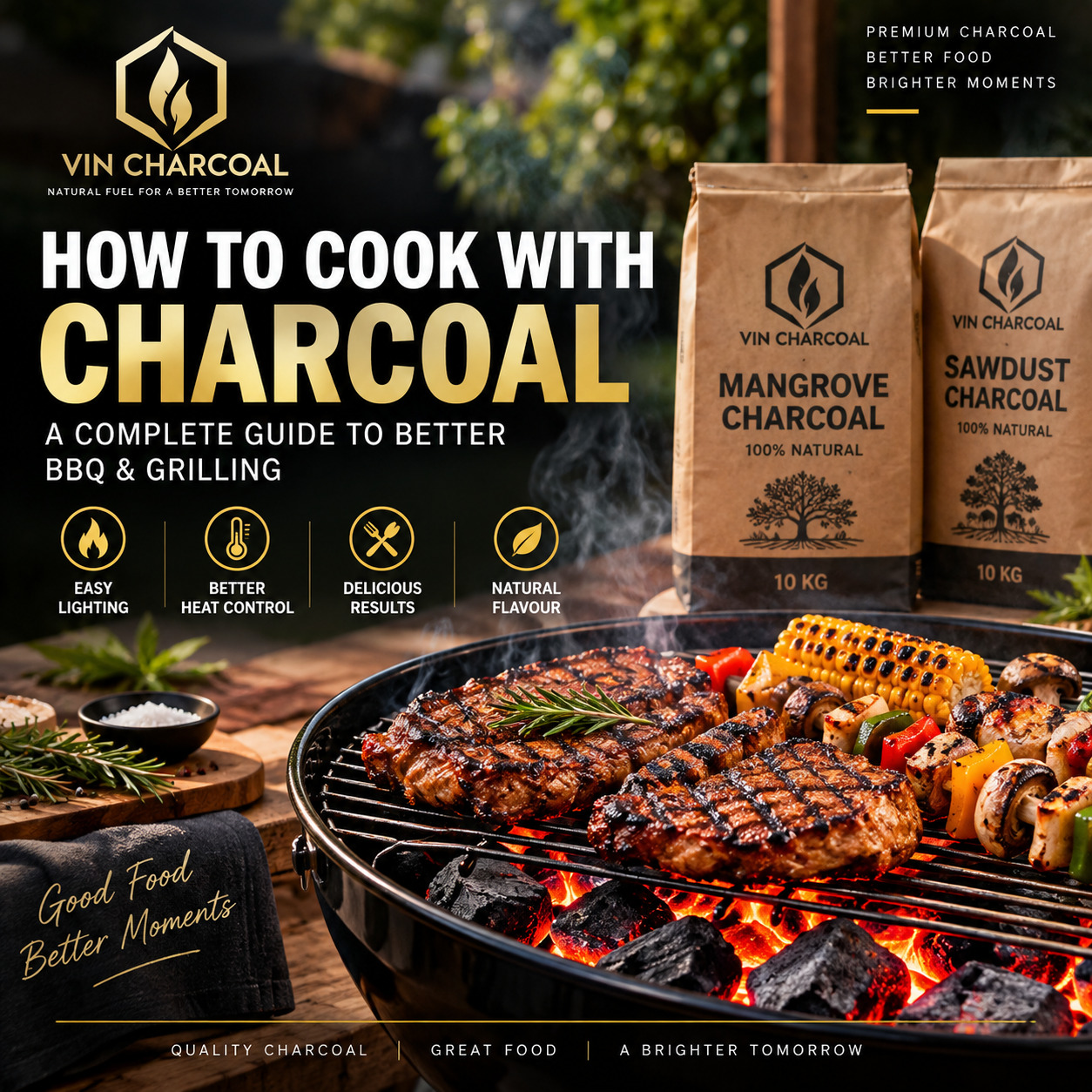
Cooking with charcoal is one of the most rewarding ways to prepare food outdoors. The glowing coals, intense heat and unmistakable barbecue atmosphere make charcoal grilling a favourite choice for backyard BBQs, family gatherings and outdoor cooking.
However, learning how to cook with charcoal involves more than simply lighting a fire and placing food on the grill. The type of charcoal you choose, how you arrange the coals, when you start cooking and how you control airflow can all influence the final result.
Once you understand these fundamentals, charcoal cooking becomes much easier and more predictable.
In this guide, Vin Charcoal explains the essential techniques for charcoal BBQ and grilling, from preparing your grill and lighting the charcoal to controlling temperature and cooking different types of food.
Whether you are preparing steaks, chicken, seafood or vegetables, these practical techniques can help you achieve better results from your charcoal grill.
Charcoal grilling remains popular because it offers a cooking experience that is difficult to replicate with many other heat sources.
One of its biggest advantages is high cooking temperature. Properly prepared charcoal can provide strong radiant heat, making it particularly suitable for grilling foods that benefit from fast searing.
This can help create the browned, caramelised exterior commonly associated with barbecue cooking.
Charcoal also gives the cook considerable flexibility. By changing the amount and position of the charcoal, you can create different temperature zones within the same grill.
This allows you to sear food over high heat before moving it to a cooler area to finish cooking more gradually.
For many people, charcoal cooking is as much about the experience as the food.
Lighting the charcoal, waiting for the coals to become ready and cooking over an open grill create the traditional atmosphere associated with outdoor barbecue.
It also encourages more hands-on temperature management. Instead of selecting a temperature on a control panel, you manage the heat through charcoal quantity, charcoal placement and airflow.
Once these skills become familiar, controlling a charcoal BBQ becomes much easier.
Before learning how to cook with charcoal, it is important to choose charcoal appropriate for your cooking method.
Different charcoal products can vary in size, density, burn characteristics and intended use.
For BBQ cooking, consistency is particularly useful because predictable heat makes it easier to manage cooking times.
At Vin Charcoal, our charcoal range includes Mangrove Charcoal and Sawdust Charcoal, providing options for different grilling and cooking requirements.
Mangrove charcoal is a natural lump-style charcoal produced from mangrove wood.
The solid pieces make it suitable for many traditional charcoal cooking applications where strong, sustained heat is useful.
Vin Charcoal offers Mangrove Charcoal in:
10 kg bags and 15 kg bags.
It can be used for BBQ grilling, restaurants, commercial kitchens and other charcoal cooking applications where reliable heat is important.
Sawdust charcoal is produced from compressed sawdust, creating pieces with a more uniform shape and density.
The consistency of the pieces can make charcoal arrangement straightforward and help provide an even cooking setup.
Vin Charcoal offers Sawdust Charcoal in 10 kg boxes.
The right option ultimately depends on your grill, the food being prepared and how long you intend to cook.
Good charcoal cooking starts before the food reaches the grill.
First, make sure your BBQ is positioned outdoors in a well-ventilated location and on a stable, suitable surface. Charcoal produces carbon monoxide while burning, so it should never be used in an enclosed indoor environment.
Remove excessive ash from previous cooking sessions because accumulated ash can restrict airflow through the bottom of the grill.
Next, check that the air vents can open and close freely.
Airflow is one of the main ways to control the behaviour of a charcoal fire.
There is no single amount that works for every BBQ.
The amount of charcoal required depends on factors such as:
For a quick grilling session, you may need less charcoal than you would for a longer cook.
For high-temperature searing, you generally want a concentrated bed of hot charcoal.
Rather than filling the grill automatically, consider what you are cooking first and build the fire accordingly.
Learning how to light charcoal correctly is an important part of successful charcoal cooking.
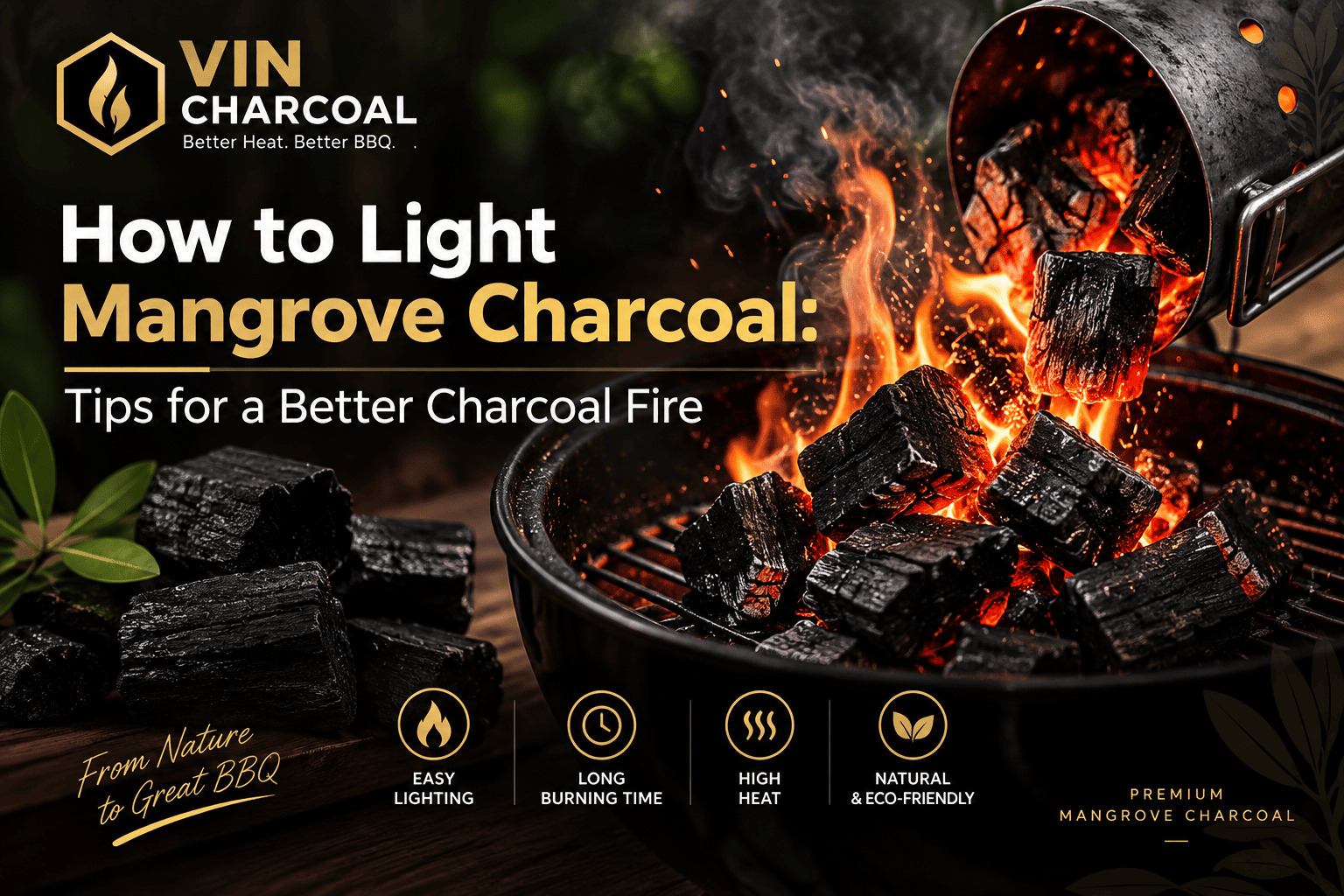
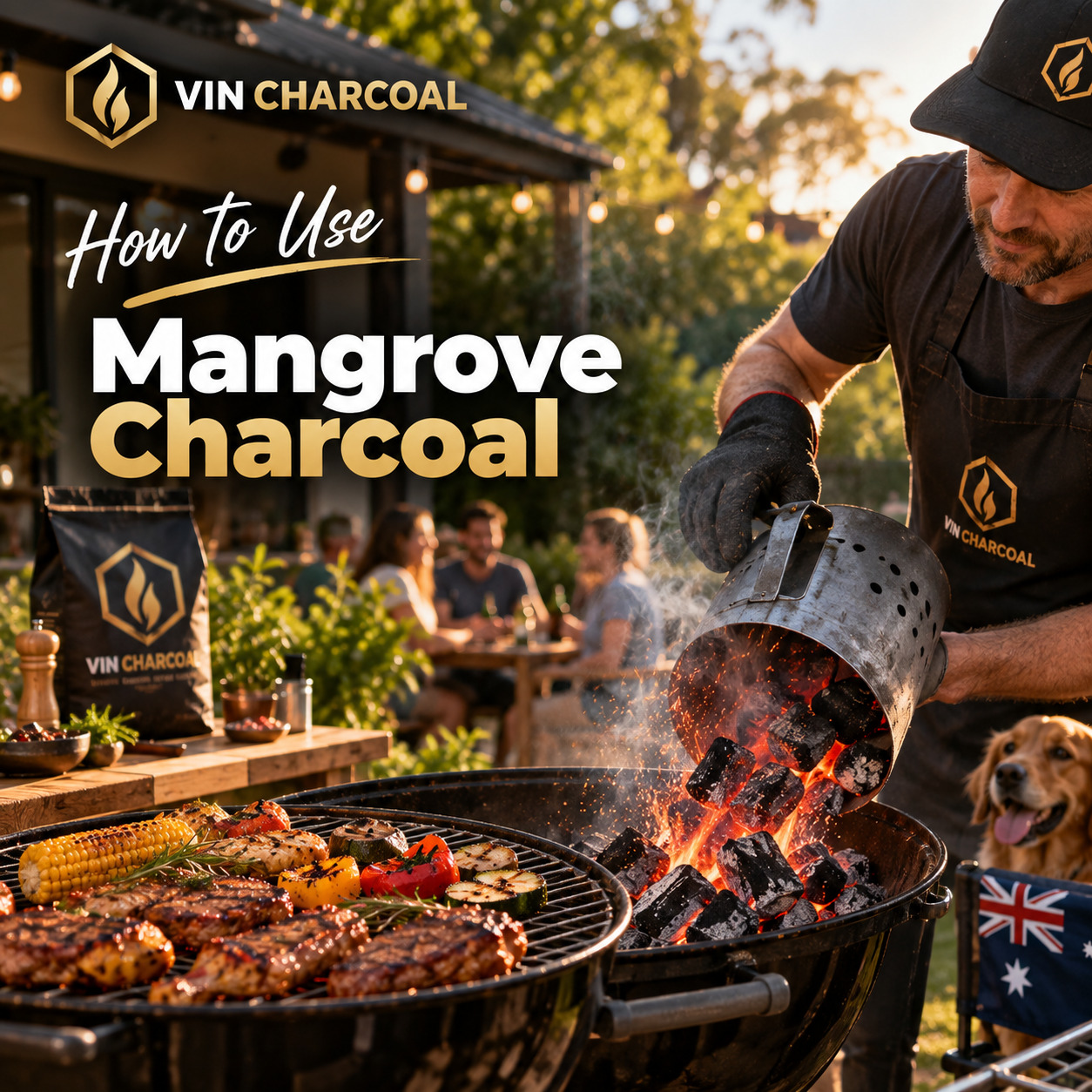
A chimney starter is one of the simplest methods for lighting charcoal because it allows a group of charcoal pieces to ignite together while maintaining good airflow.
Place your charcoal into the chimney starter and use an appropriate fire starter underneath according to the manufacturer's directions.
As the lower pieces ignite, heat rises through the chimney and helps ignite the charcoal above.
Avoid putting food on the grill immediately after the first charcoal pieces ignite.
Give the charcoal time to establish a stable fire.
Depending on the charcoal and lighting method, you may notice the pieces becoming visibly hot and developing a light ash coating on their surfaces.
Once the charcoal is sufficiently established, carefully distribute it in the grill according to your desired cooking setup.
One of the most useful techniques to learn is the difference between direct and indirect grilling.
You do not always want food directly above the hottest charcoal.
Creating separate heat zones gives you significantly more control.
With direct grilling, food sits directly above the hot charcoal.
This method works well for foods that cook relatively quickly or benefit from strong surface browning.
Examples can include:
Direct heat can produce excellent searing, but food needs attention because high temperatures can quickly cause overcooking or burning.
For indirect cooking, charcoal is positioned away from part of the cooking grate.
The food is then placed over the section without charcoal directly underneath it.
Close the BBQ lid when appropriate so heat circulates around the food.
Indirect heat is useful for larger or thicker foods that require more time to cook through.
Examples include whole chicken, larger cuts of meat and other foods that may burn externally before their centres are properly cooked if left directly above intense charcoal.
A two-zone fire is one of the most practical charcoal grilling setups.
Instead of spreading charcoal evenly across the entire grill, concentrate most or all of it on one side.
You now have:
Hot zone: Directly above the charcoal.
Cooler zone: The side without charcoal directly underneath.
This simple arrangement gives you much greater control.
Imagine you are cooking a thick steak.
You can start the steak over the hot zone to develop browning and grill marks. If the outside is cooking faster than the centre, move it to the cooler zone.
The same technique is useful if fat dripping onto the charcoal causes flare-ups.
Instead of removing the food completely, simply move it temporarily to the indirect side.
For beginners learning how to cook with charcoal, mastering two-zone grilling can make a substantial difference.
Unlike a gas BBQ, charcoal does not have a temperature dial.
Instead, temperature is influenced primarily by the amount of burning charcoal and the oxygen reaching the fire.
Most charcoal BBQs have adjustable vents.
Opening the vents generally increases airflow, which can make the charcoal burn more actively.
Reducing airflow can reduce the intensity of the fire.
The lid is another important part of temperature management.
Leaving the grill completely open can be useful for some fast direct-grilling applications, but closing the lid helps create a more controlled cooking environment.
With the lid closed, heat can circulate around the food rather than reaching it only from below.
If your BBQ has a thermometer, use it as a guide to understand how adjustments to the vents affect the cooking temperature.
Steak is one of the classic foods for charcoal grilling.
Before cooking, prepare the steak as desired and allow excess surface moisture to be removed. Season according to your preference.
Create a hot direct-heat zone and a cooler indirect zone.
Place the steak over the hot charcoal to begin searing.
Once sufficient browning develops, turn the steak and cook the other side.
For thicker steaks, move the meat to the indirect zone if additional cooking time is needed.
Appearance alone is not always a reliable indication that meat has reached your preferred or safe internal temperature.
A food thermometer provides a much more reliable measurement.
Insert the thermometer into the thickest appropriate part of the meat and follow recognised food-safety temperature guidance for the type of food being prepared.
After cooking, allowing steak to rest briefly before slicing can also help produce a better eating experience.
Chicken benefits greatly from two-zone cooking.
If chicken is placed over intense charcoal for the entire cooking process, the exterior can brown or burn before the inside is fully cooked.
Begin with controlled heat and use the indirect side when necessary.
Bone-in chicken pieces often require more cooking time than smaller boneless pieces.
Always check the internal temperature with a suitable food thermometer before serving.
Fish, prawns and other seafood can cook quickly over charcoal.
Because seafood is often more delicate than meat, avoid unnecessarily intense heat for extended periods.
A clean cooking grate is particularly important for fish.
Depending on the seafood, lightly oiling the food or cooking surface can also help reduce sticking.
For small seafood such as prawns, skewers or a grill basket can make handling easier.
Charcoal BBQs are not only for meat.
Vegetables can develop excellent colour and texture when grilled correctly.
Popular options include:
Cut vegetables into pieces large enough that they will not fall through the cooking grate.
A light coating of cooking oil can help with browning and reduce sticking.
Firm vegetables may require more cooking time, while softer vegetables can cook quickly over direct heat.
Again, a two-zone grill gives you flexibility if vegetables begin browning too rapidly.
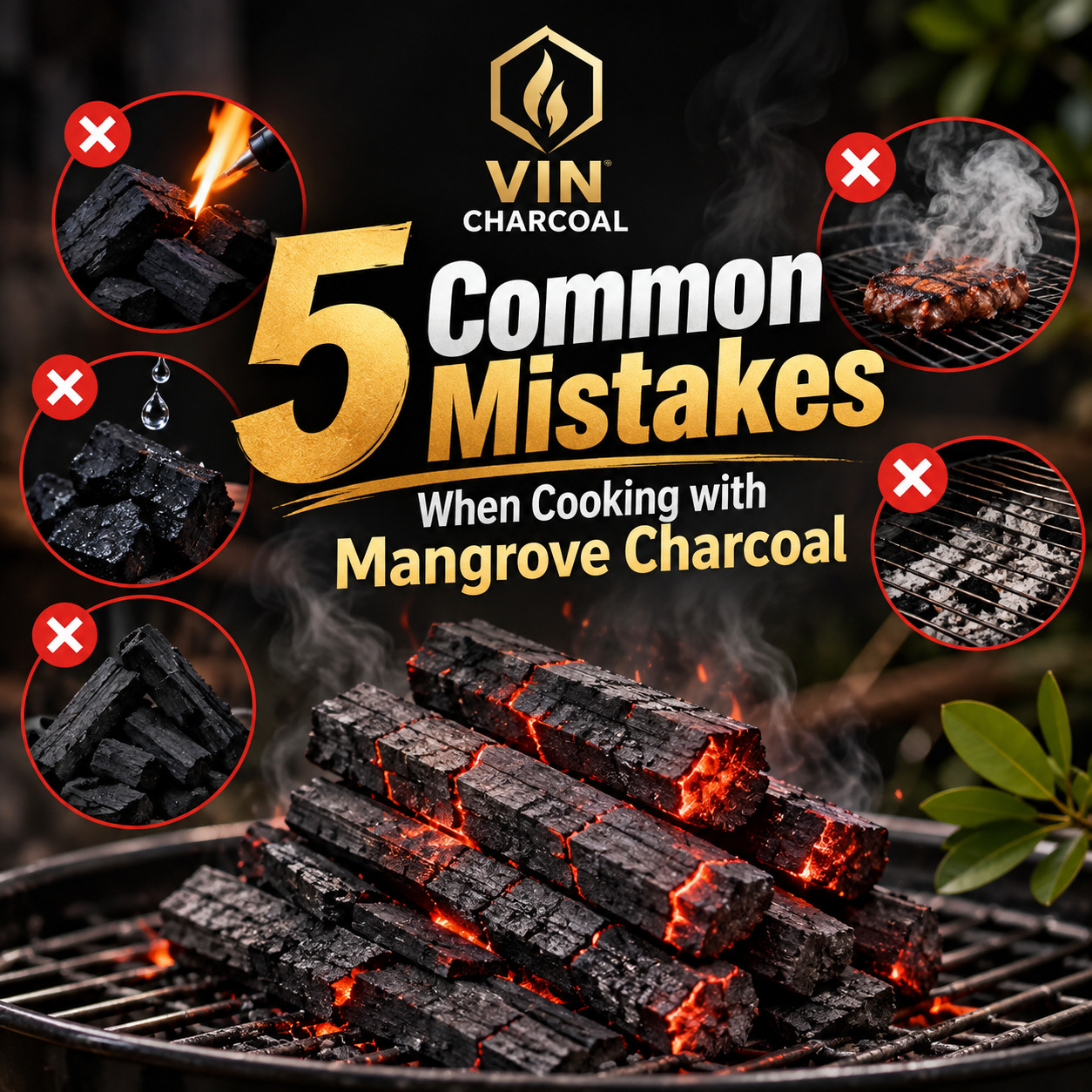
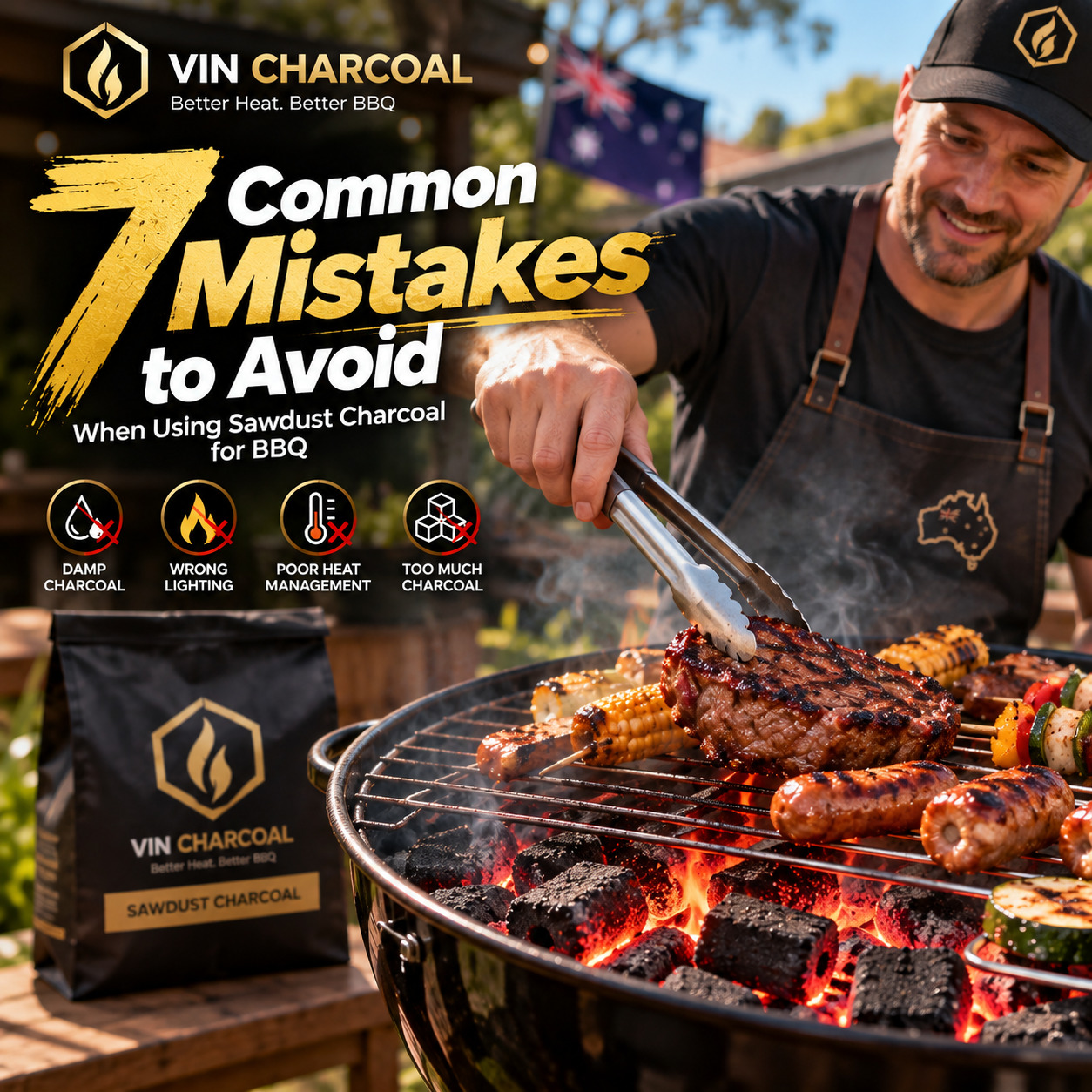
Even experienced BBQ cooks occasionally encounter problems. Understanding the most common mistakes can make charcoal cooking much easier.
Putting food on too early can lead to inconsistent cooking.
Allow the charcoal fire to establish before beginning.
Covering the entire grill with equally intense charcoal leaves nowhere to move food if it starts cooking too quickly.
A two-zone setup solves this problem.
Repeatedly lifting the lid changes the cooking environment and can make temperature management more difficult.
Check food when necessary, but avoid opening the BBQ unnecessarily during longer covered cooking.
Closing vents too much can reduce oxygen to the charcoal.
Conversely, unrestricted airflow can make the charcoal burn more aggressively.
Learning how your particular BBQ responds to vent adjustments is an important part of mastering charcoal grilling.
Charcoal grilling involves open heat and requires supervision.
Keep children and pets at a safe distance, use suitable BBQ tools and never leave an active charcoal grill unattended.
Safety should always be part of charcoal cooking.
Use charcoal grills outdoors only in a properly ventilated area. Never operate a charcoal BBQ inside a house, garage, tent or other enclosed space because burning charcoal produces carbon monoxide.
Place the grill on a stable surface away from easily combustible materials.
Use long-handled BBQ tools when working over high heat.
After cooking, make sure the charcoal and ash are completely extinguished and cooled before disposal.
Never assume charcoal is safe to handle simply because there are no visible flames. Coals can remain hot for a considerable period.
Great charcoal BBQ comes from consistency rather than complexity.
Start with suitable charcoal, establish the fire properly and create different heat zones.
Pay attention to airflow and learn how your particular grill behaves.
A thermometer can also remove much of the guesswork from both grill temperature and food doneness.
Most importantly, adjust your technique based on the food.
Thin foods generally need less cooking time, while thicker cuts benefit from combining direct and indirect heat.
As you gain experience, judging charcoal quantity, airflow and cooking zones becomes increasingly intuitive.
Both options can have a place in charcoal cooking.
Mangrove Charcoal is suitable for users looking for traditional natural charcoal pieces and strong heat for BBQ and grilling applications.
Sawdust Charcoal offers compressed, consistently shaped pieces that can be convenient when an orderly and predictable charcoal setup is preferred.
Vin Charcoal currently supplies:
Mangrove Charcoal — 10 kg and 15 kg
Sawdust Charcoal — 10 kg boxed format
The best choice depends on your BBQ equipment, cooking style, required heat and duration of use.
There is no exact time that applies to every charcoal product and grill. Wait until the charcoal has established a strong, stable burn and is ready to provide consistent cooking heat before placing food on the grill.
Yes. For longer cooking sessions, additional charcoal may sometimes be required.
Add it carefully and allow newly added charcoal to establish appropriately while maintaining control of the cooking temperature.
It depends on the food and cooking technique.
Direct, fast grilling may sometimes be performed with the lid open, while closing the lid is particularly useful when you want heat to circulate around thicker foods or when using indirect cooking.
Use a combination of charcoal quantity, charcoal placement and the BBQ's air vents.
A two-zone fire is particularly useful because food can be moved between hotter and cooler areas.
Almost anything suitable for grilling can be prepared over charcoal, including steak, chicken, burgers, sausages, seafood, kebabs and vegetables.
Different foods simply require different heat levels and cooking times.
Learning how to cook with charcoal does not require complicated techniques.
The fundamentals are straightforward: choose suitable charcoal, light it properly, create controllable heat zones and adjust airflow according to the food you are cooking.
Once you understand direct and indirect heat, charcoal grilling becomes much easier to manage.
Whether you are preparing a quick family BBQ or cooking for a larger gathering, good charcoal and good fire management provide the foundation for a better grilling experience.
Vin Charcoal, operated by VD Import Export in Melbourne, Australia, supplies Mangrove Charcoal in 10 kg and 15 kg sizes and Sawdust Charcoal in 10 kg boxes.
For product enquiries, wholesale requirements or more information about choosing charcoal for your BBQ, contact Vin Charcoal in Springvale, VIC.

I started VinCharcoal not simply from a business perspective, but from a genuine interest in charcoal and the value that a well-made product can bring to everyday cooking, grilling, and professional use. To me, charcoal is more than just a source of heat. Its quality reflects the raw materials, production process, craftsmanship, and attention to detail behind every piece. Through VinCharcoal, I want to share practical knowledge about charcoal, explore what makes a truly reliable product, and help customers better understand the importance of choosing the right charcoal for their needs.
 Loading...
 Loading...
